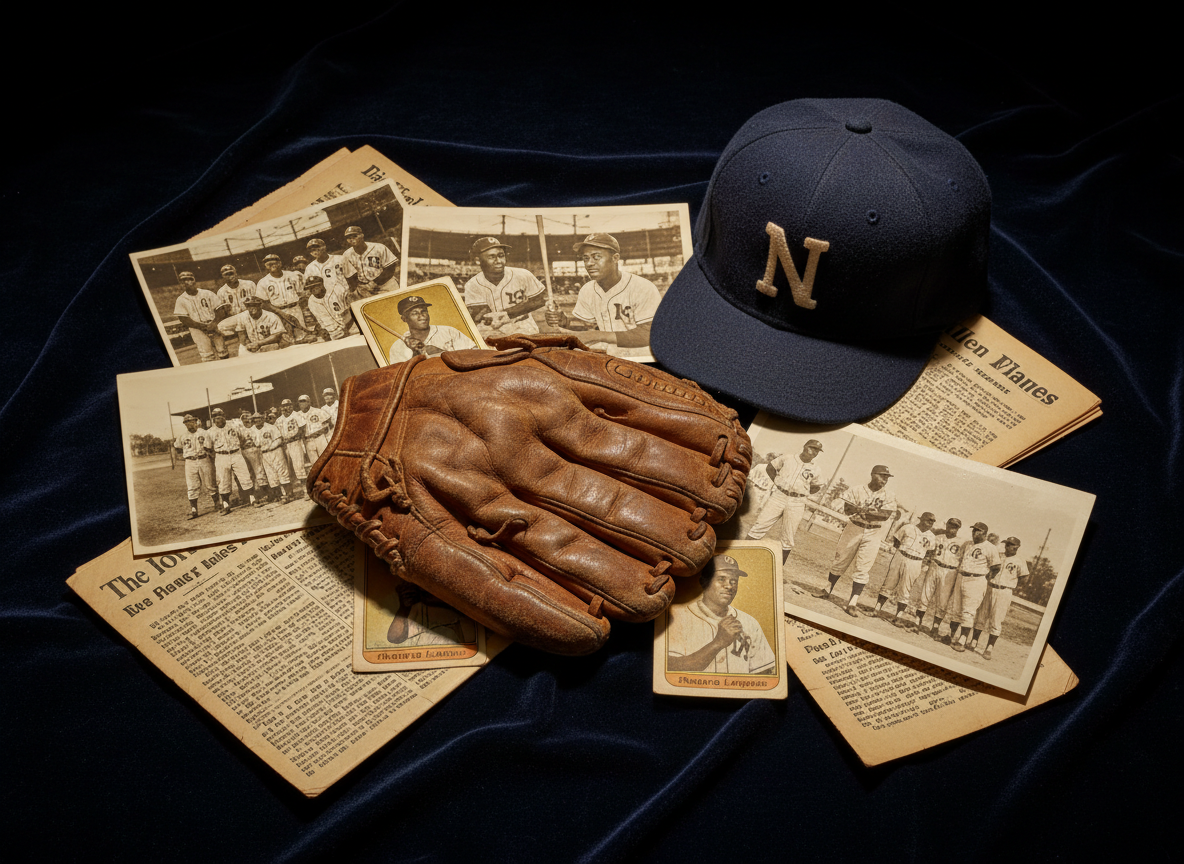
Explore the Archive
Digital
Museum
Welcome to the Jim Pendleton Digital Museum, a living archive dedicated to preserving the life, career, and legacy of Jim Pendleton. Explore a growing collection of photographs, newspaper articles, memorabilia, personal documents, and historical artifacts that tell the story of a pioneering athlete whose journey spanned the Negro Leagues, Major League Baseball, and the international game.
Each item in this collection serves as a window into a remarkable era of baseball history, offering visitors the opportunity to discover the people, moments, and achievements that helped shape the sport and the generations that followed.
Preserving the past. Honoring the legacy. Inspiring the future.
Explore the Archive
Digital Museum
Step inside the Jim Pendleton Digital Museum and browse a growing collection of photographs, documents, memorabilia, and historical artifacts.
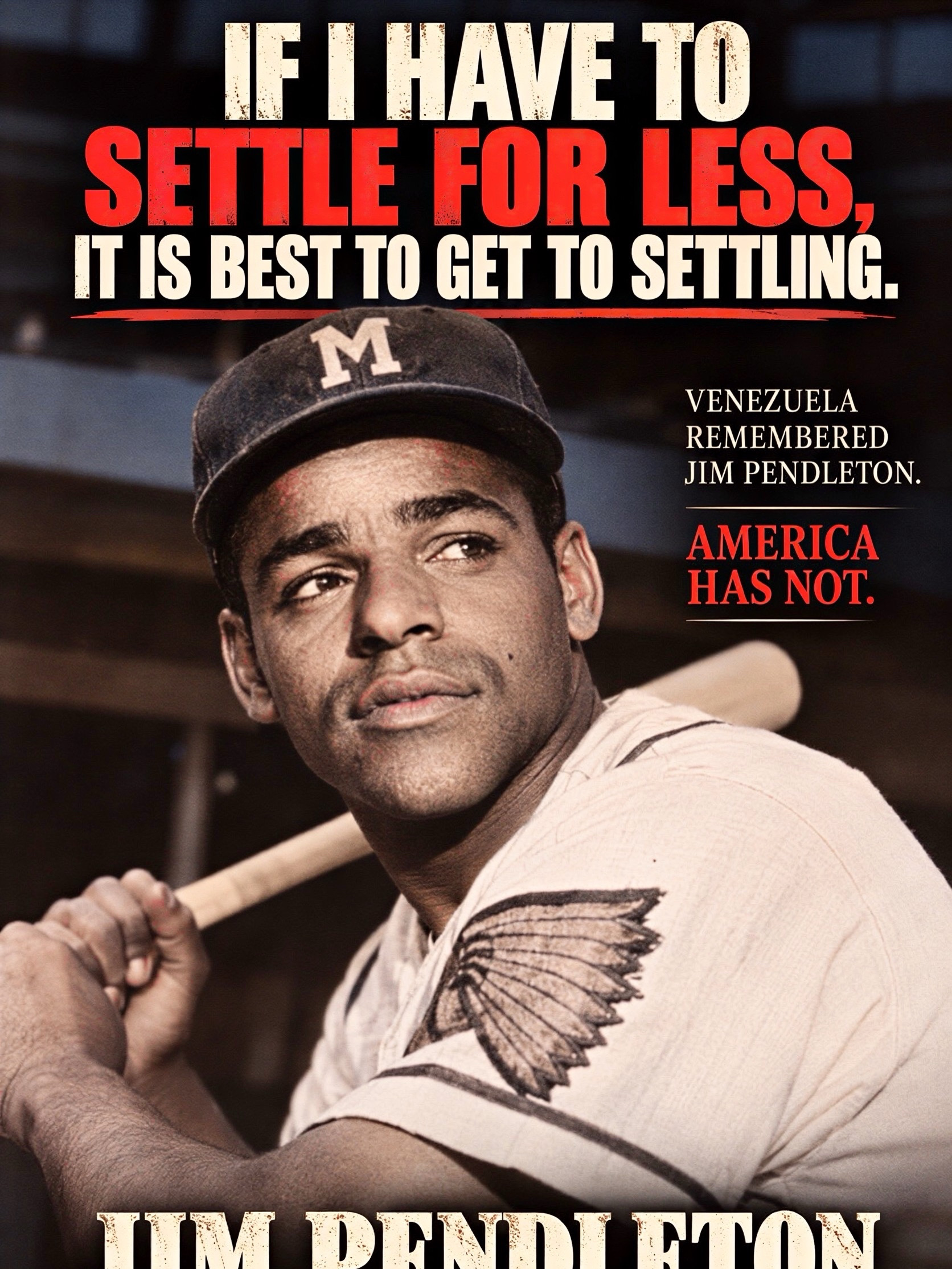
Jim Pendleton — Milwaukee Braves Portrait, "If I Have to Settle for Less" Campaign
1953
Major League Baseball
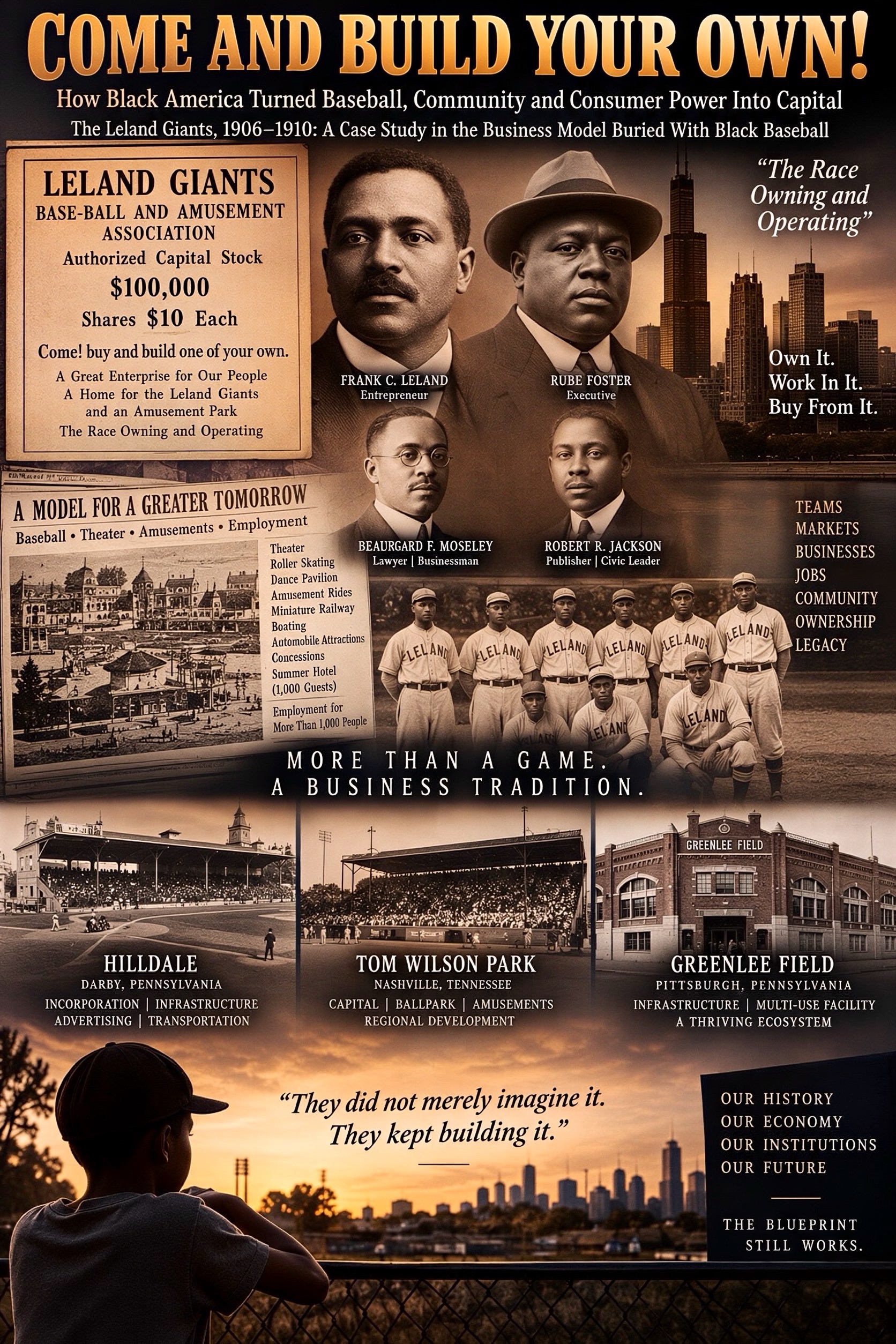
Come and Build Your Own — Leland Giants Blackball Journal Feature, 2026
2026
Legacy
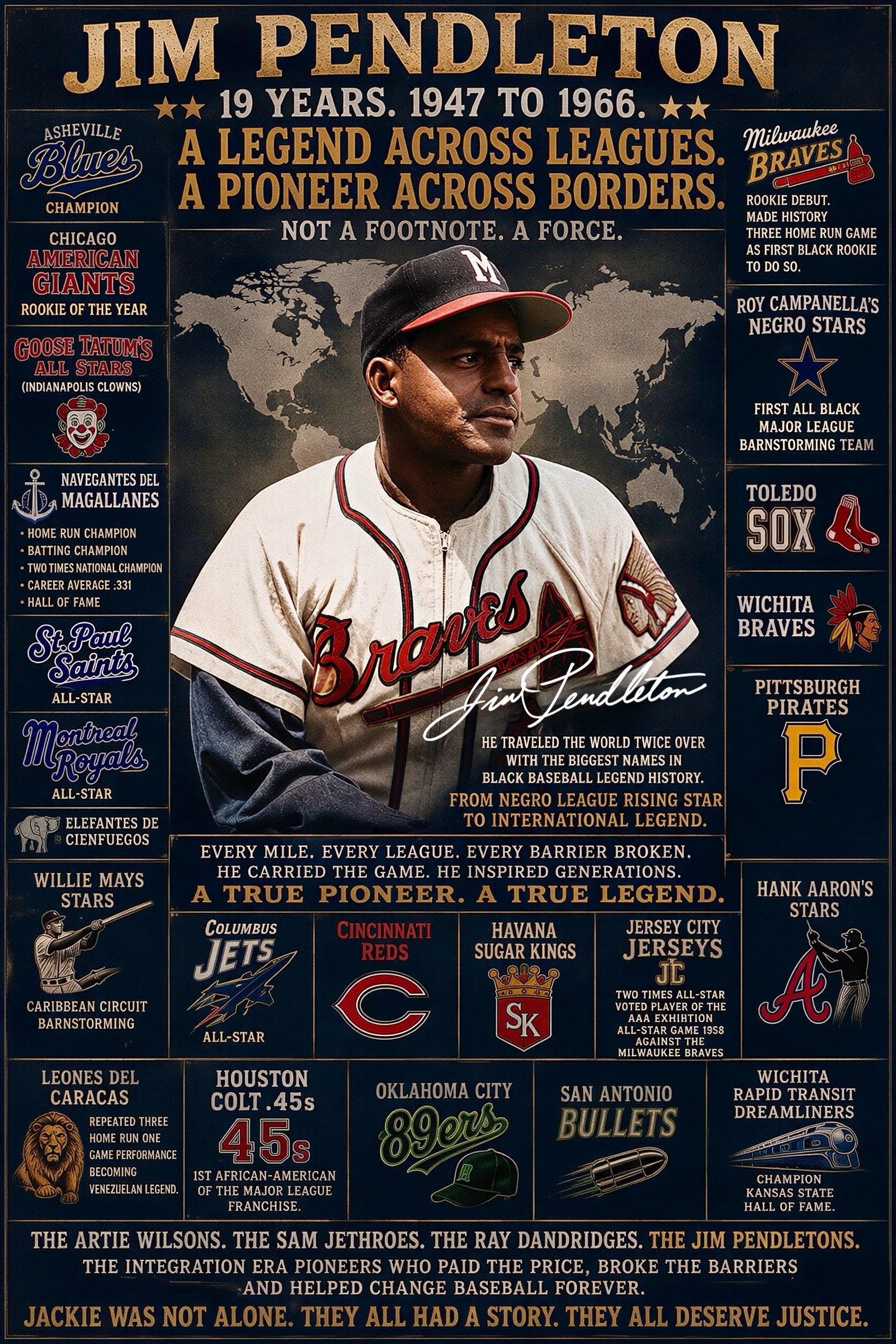
Jim Pendleton — A Legend Across Leagues, A Pioneer Across Borders (Career Tribute Infographic)
2026
Legacy
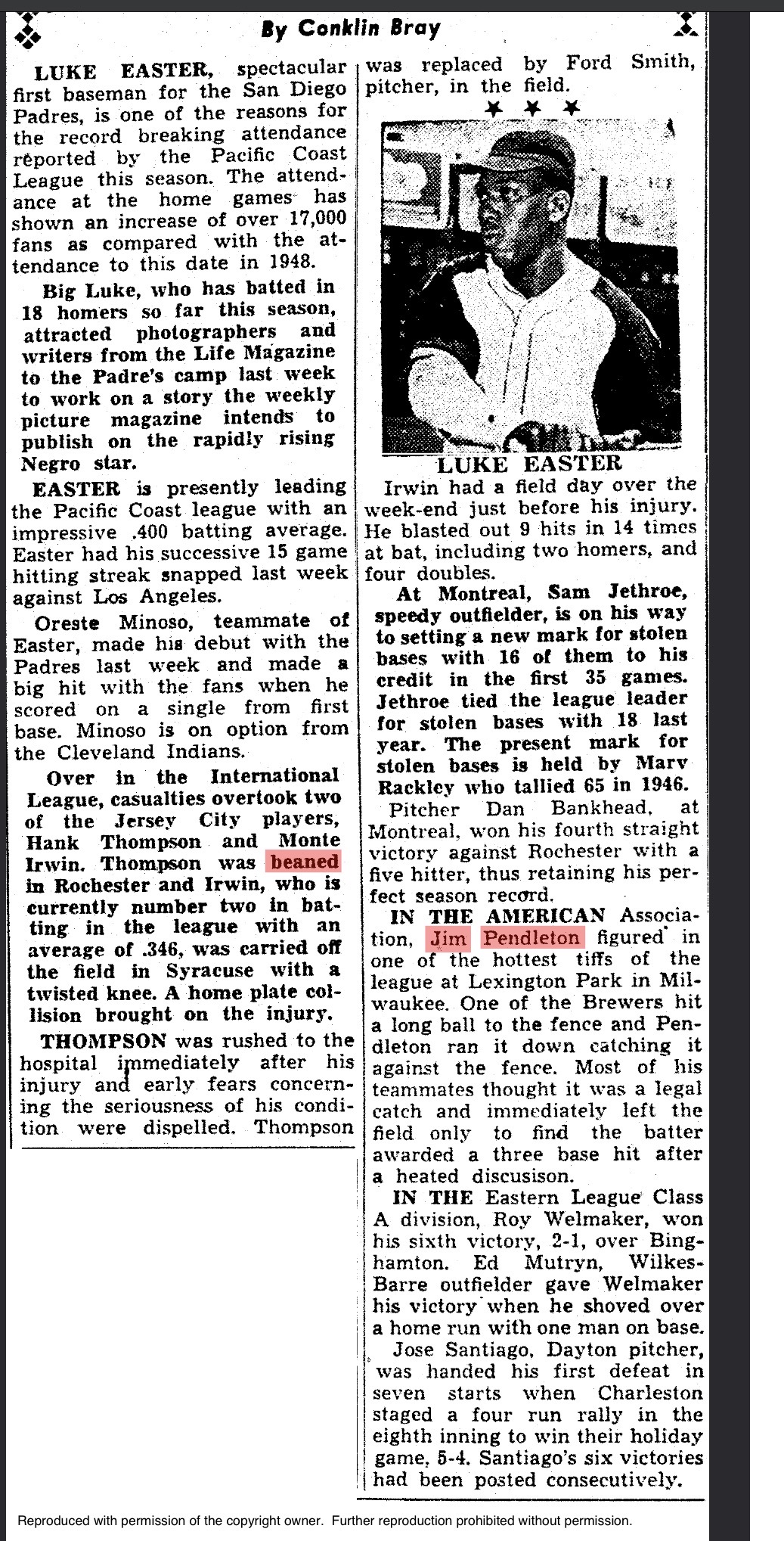
Conklin Bray Column — Pendleton's Disputed Catch at Lexington Park, American Association 1949
1949
Major League Baseball
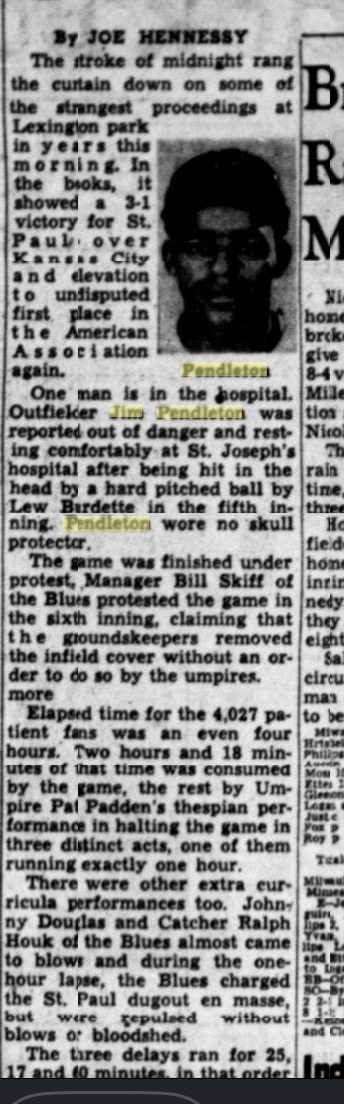
Joe Hennessy Game Report — Pendleton Beaned at Lexington Park, St. Paul Saints vs. Kansas City 1949
1949
Major League Baseball
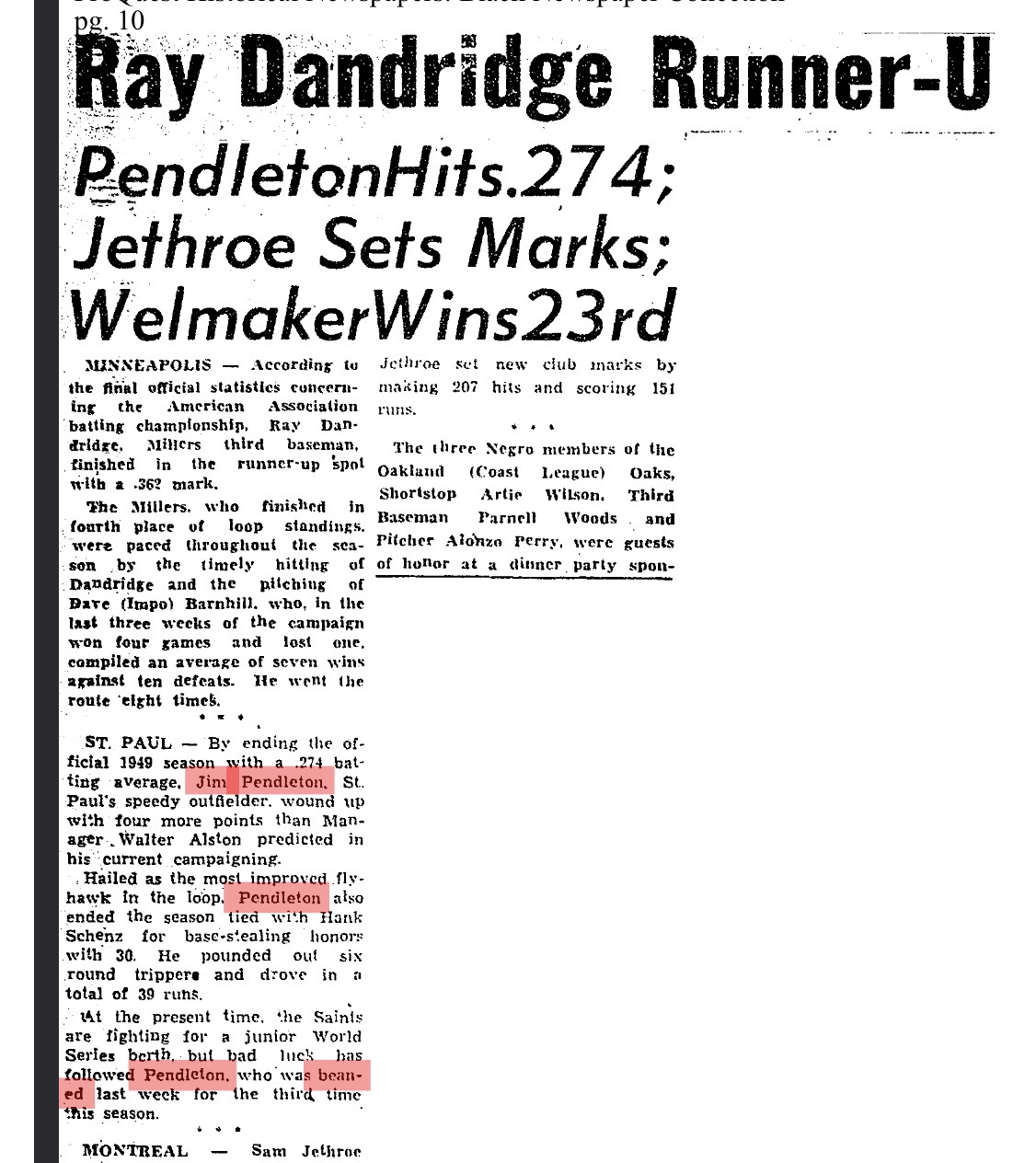
1949 American Association Season-End Statistics — Jim Pendleton Hits .274, St. Paul Saints
1949
Major League Baseball
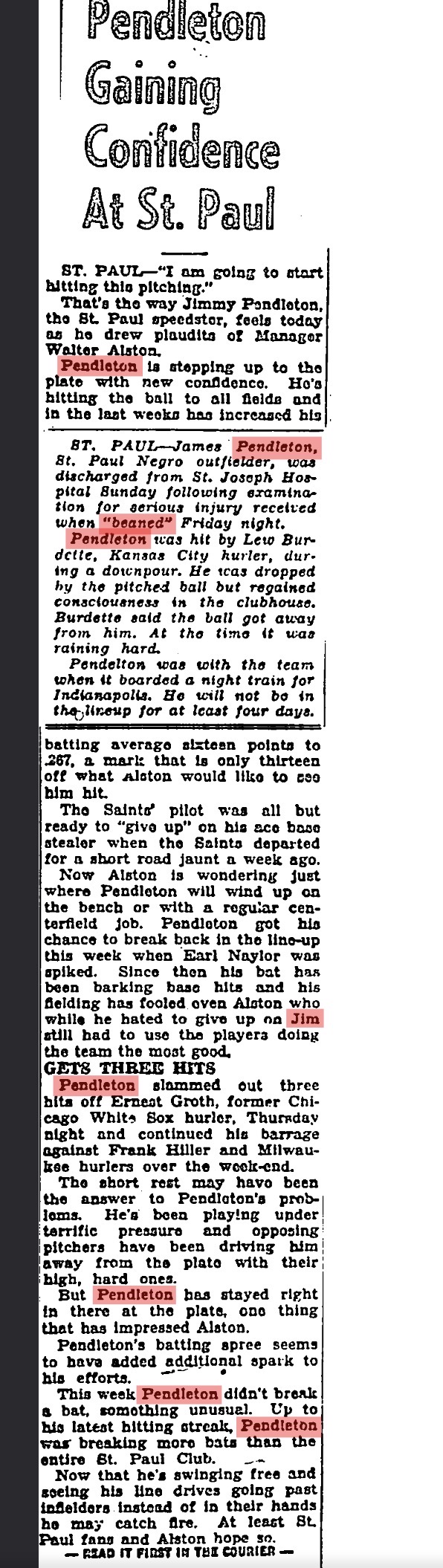
"Pendleton Gaining Confidence at St. Paul" — Pittsburgh Courier, 1949
1949
Major League Baseball
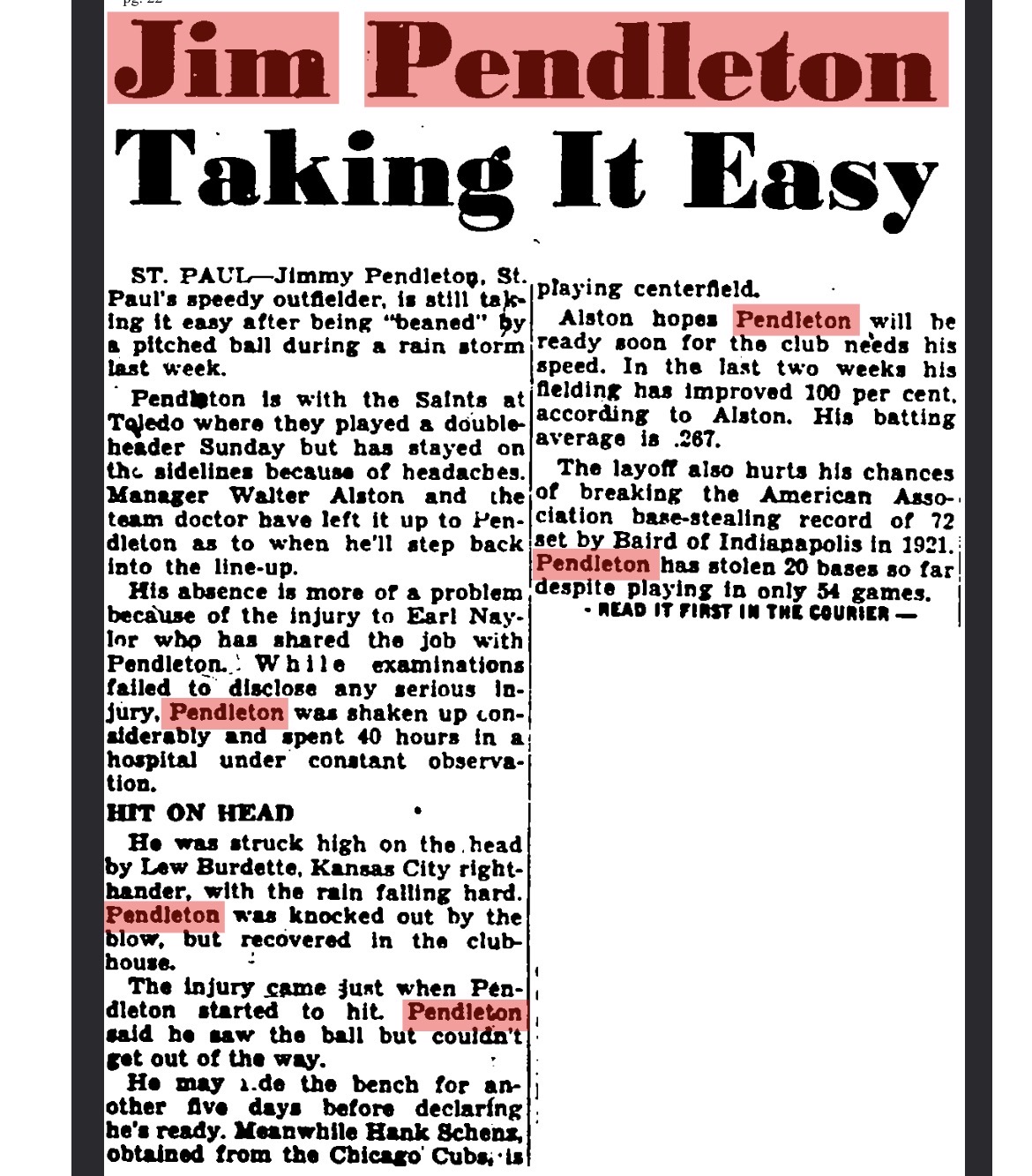
"Jim Pendleton Taking It Easy" — Pittsburgh Courier, St. Paul Saints 1949
1949
Major League Baseball
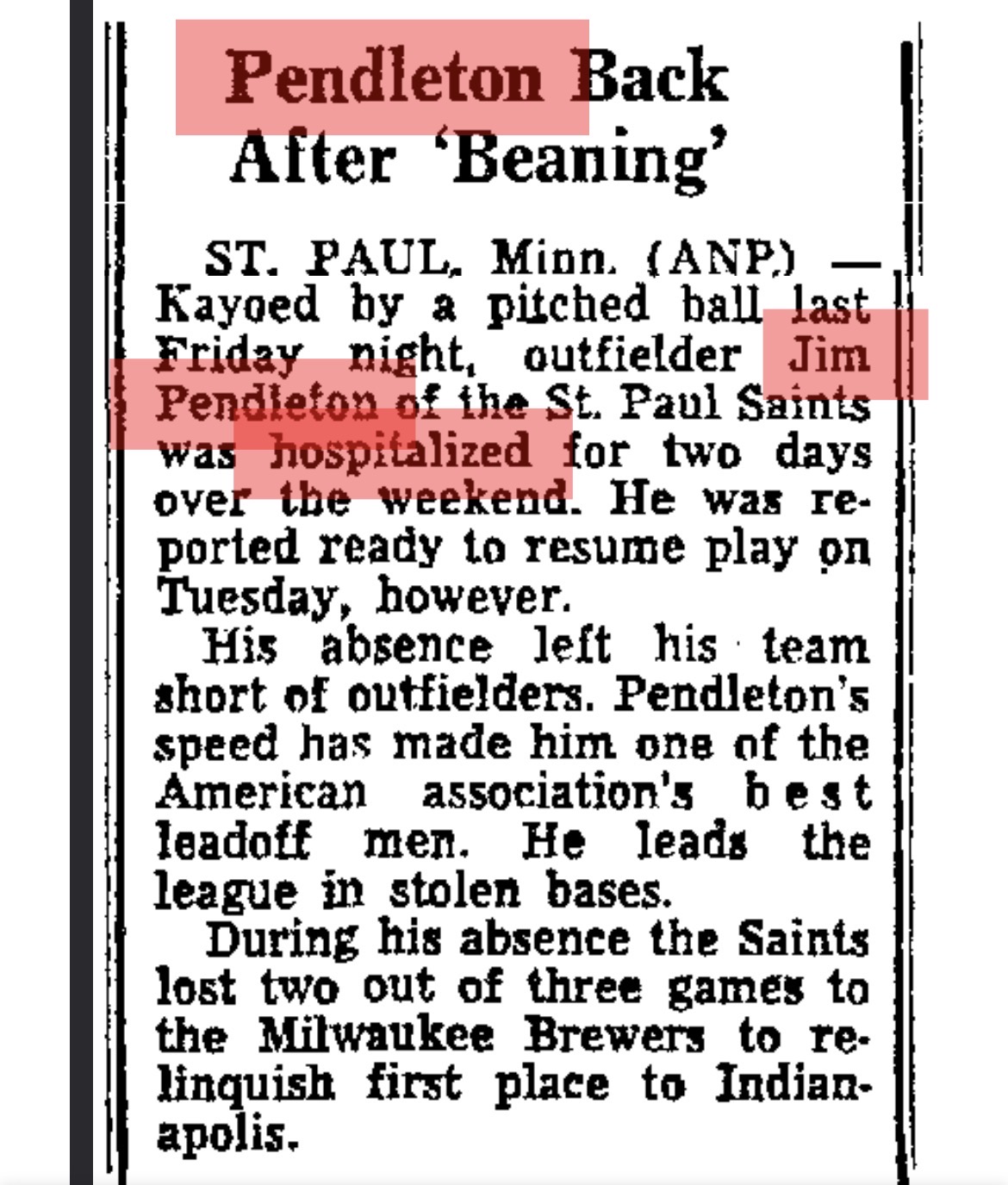
Jim Pendleton Beaned by Lew Burdette — ANP Wire Report, St. Paul Saints 1949
1949
Major League Baseball
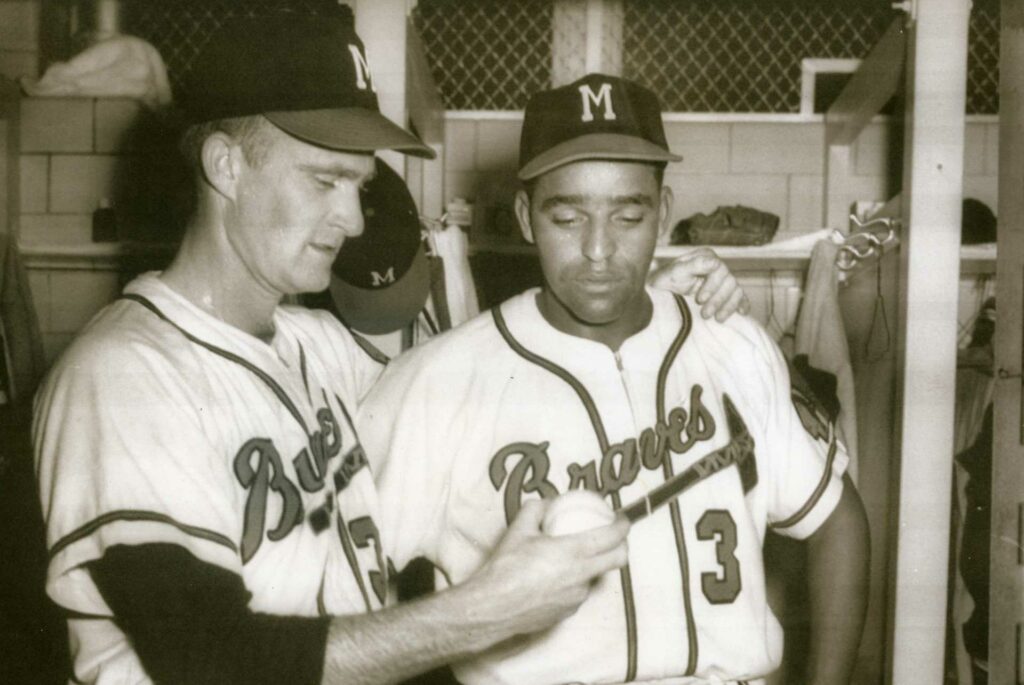
Jim Pendleton and Lew Burdette, Milwaukee Braves Locker Room, circa 1953–1957
1954
Major League Baseball
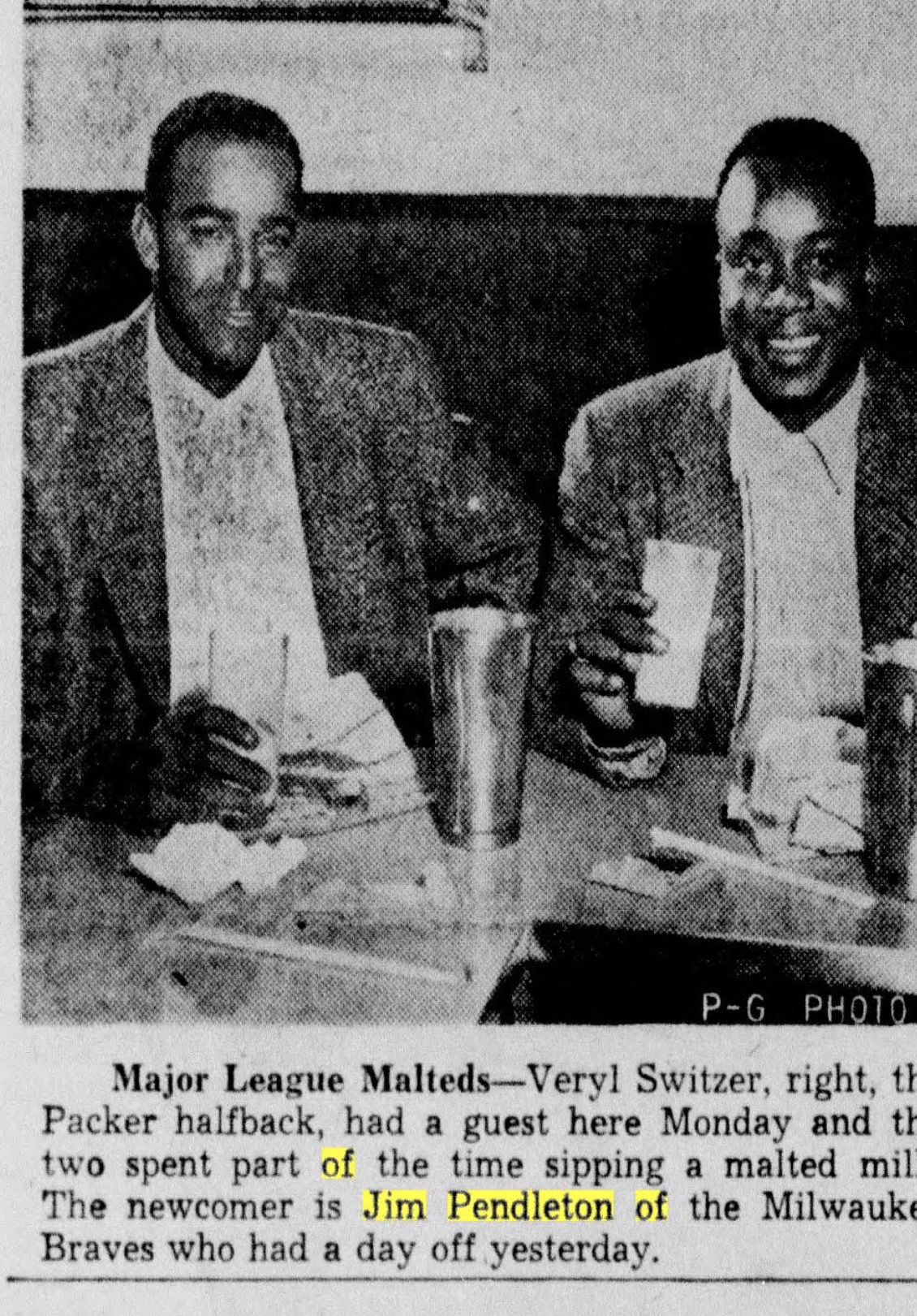
Jim Pendleton and Veryl Switzer: Major League Malteds
1955
Major League Baseball
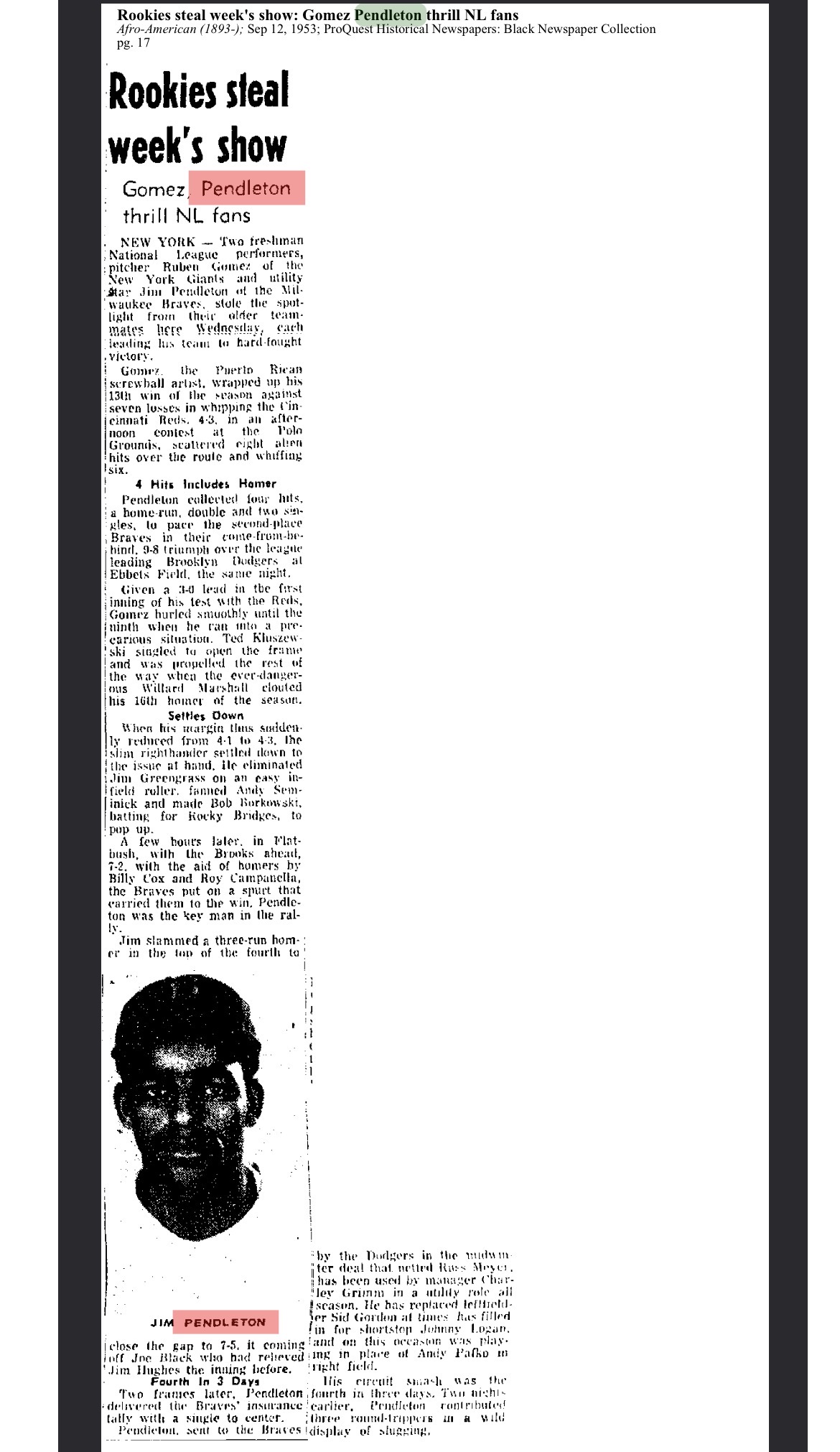
Newspaper clipping featuring Jim Pendleton's stellar performance for Milwaukee Braves
1953
Major League Baseball
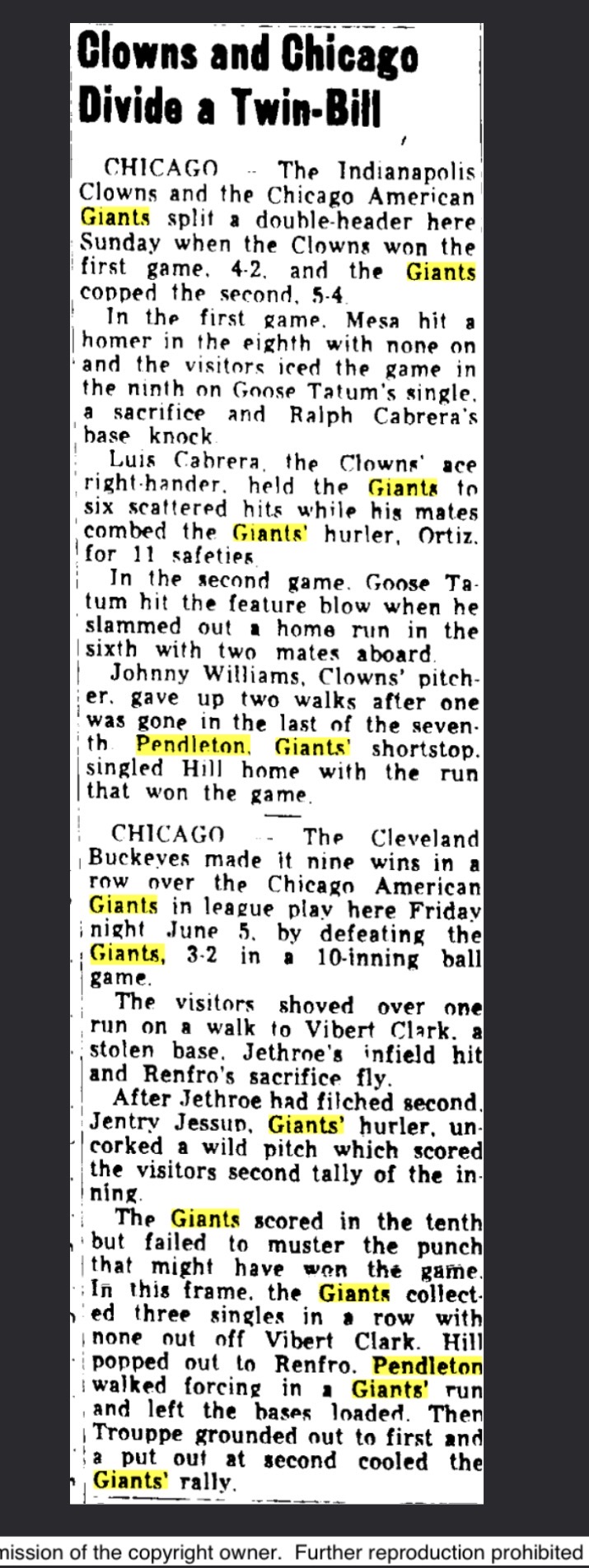
Newspaper Clipping Featuring Jim Pendleton with the Chicago American Giants
1953
Negro Leagues
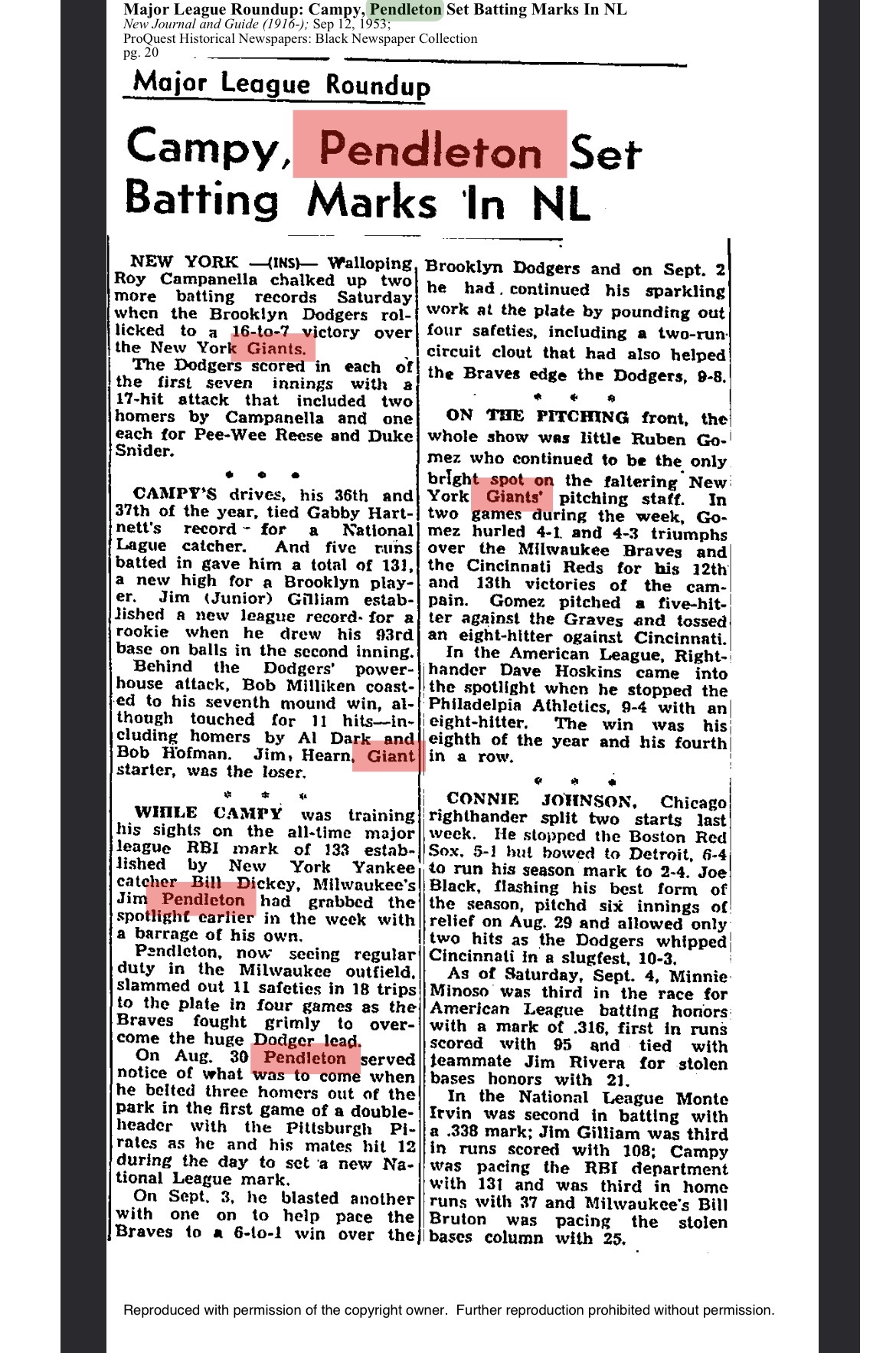
Newspaper clipping highlighting Jim Pendleton's strong batting performance for Milwaukee
1953
Major League Baseball
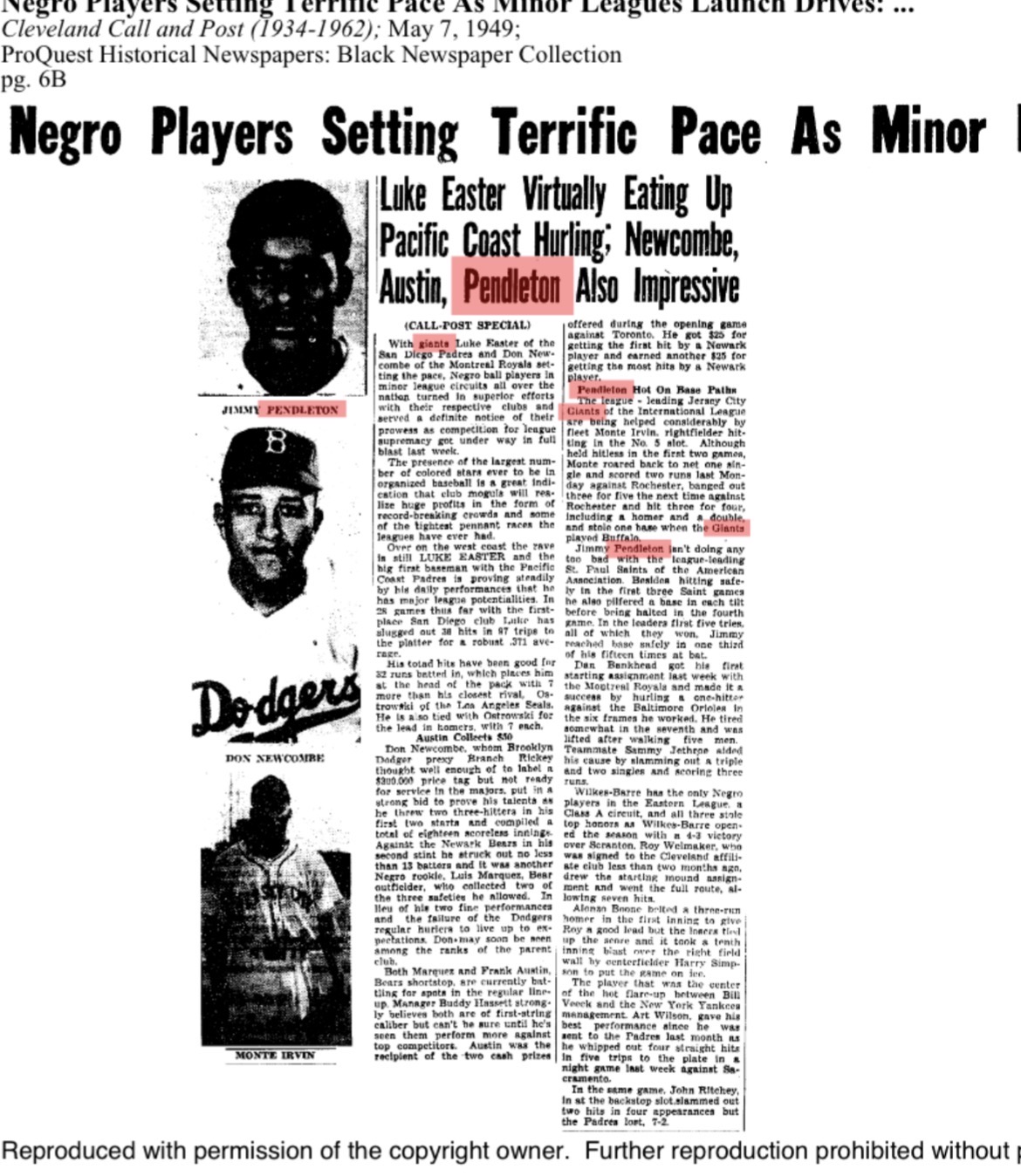
Negro Players Setting Terrific Pace in Minor Leagues Newspaper Article
1949
Major League Baseball
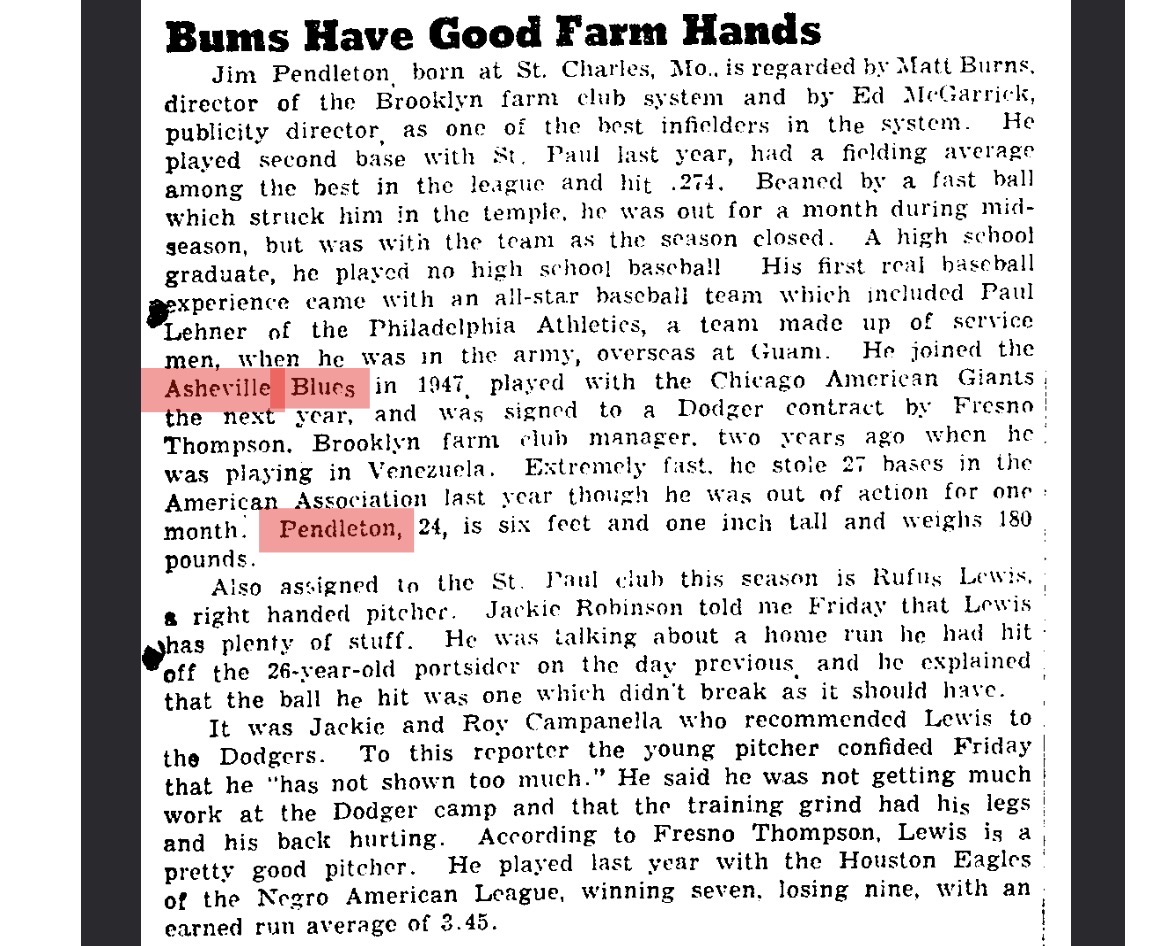
Newspaper clipping highlighting Jim Pendleton's early professional baseball career trajectory
1950
Major League Baseball
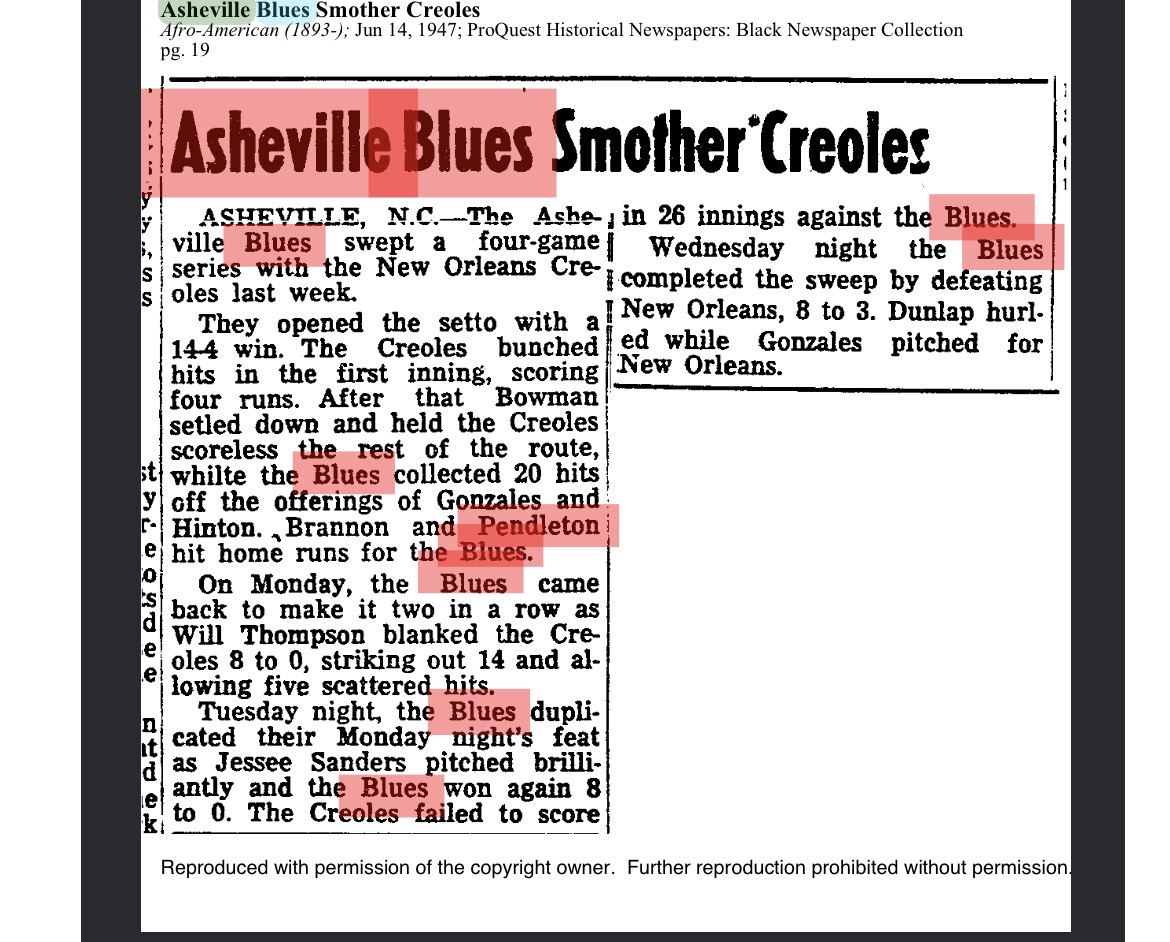
Newspaper clipping reporting the Asheville Blues' four-game sweep of Creoles
1947
Negro Leagues
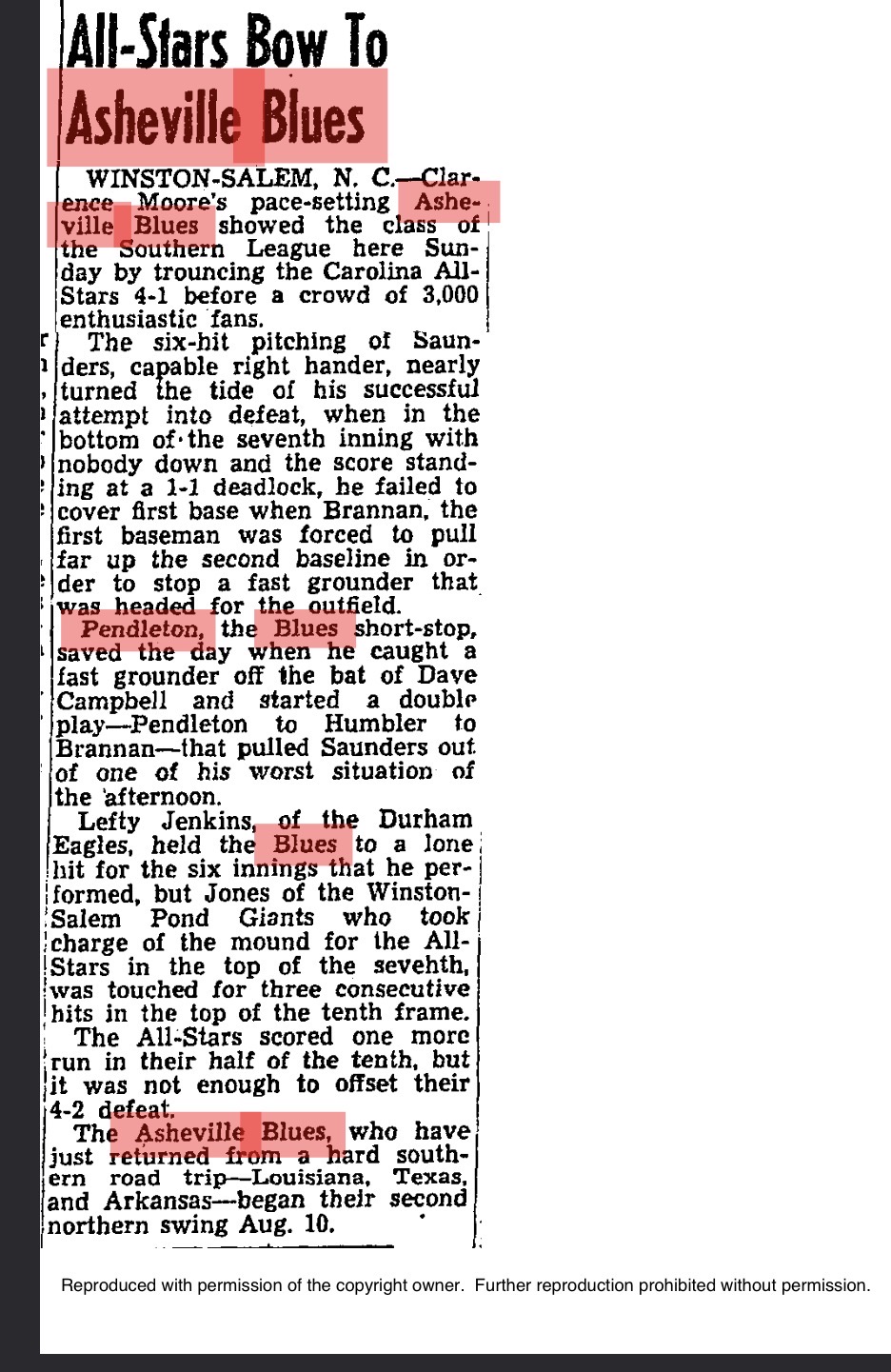
Newspaper Clipping Highlighting Jim Pendleton's Defensive Brilliance with Asheville Blues
1948
Negro Leagues
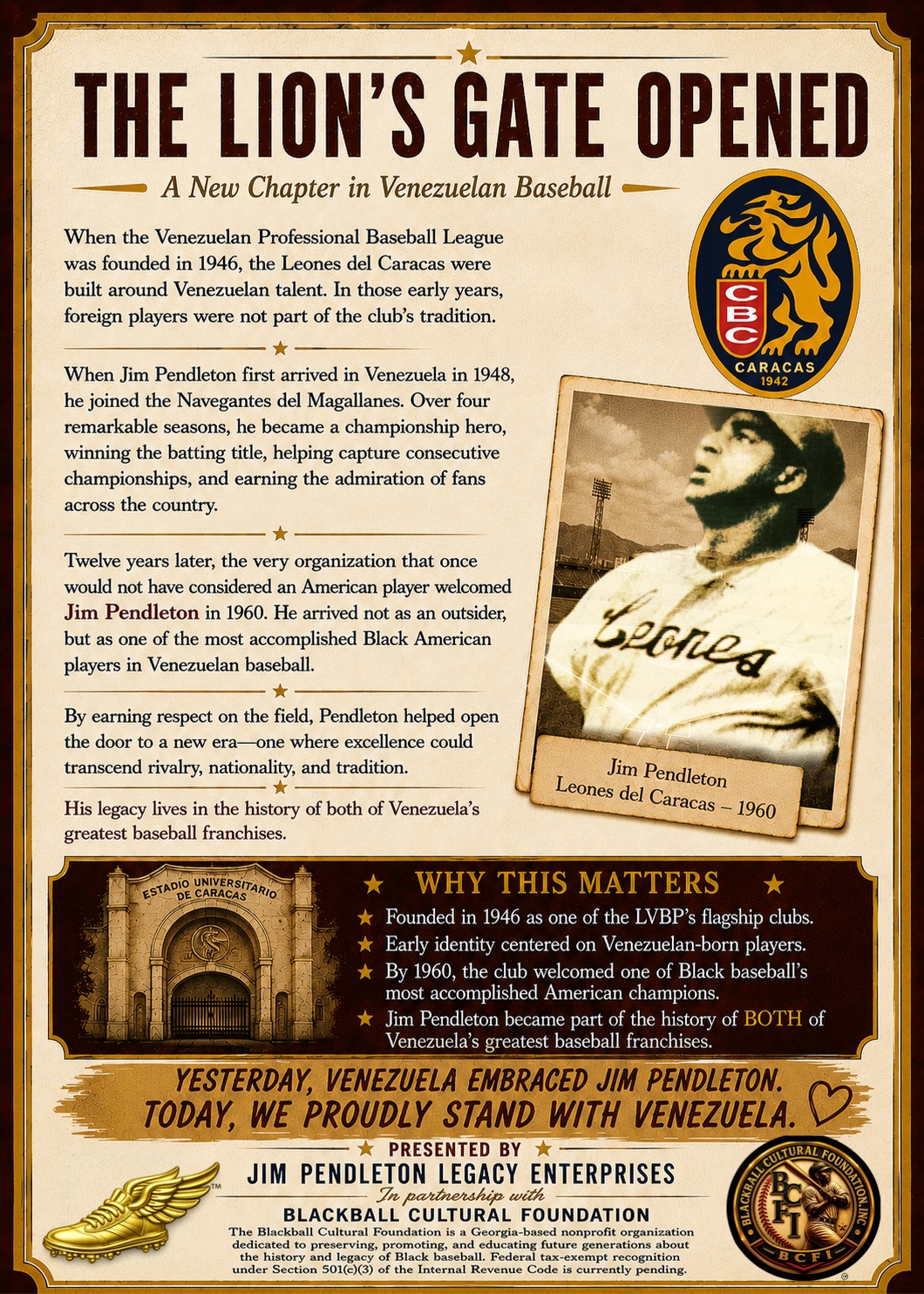
Jim Pendleton Bridging Cultures with the Leones del Caracas
1960
Major League Baseball
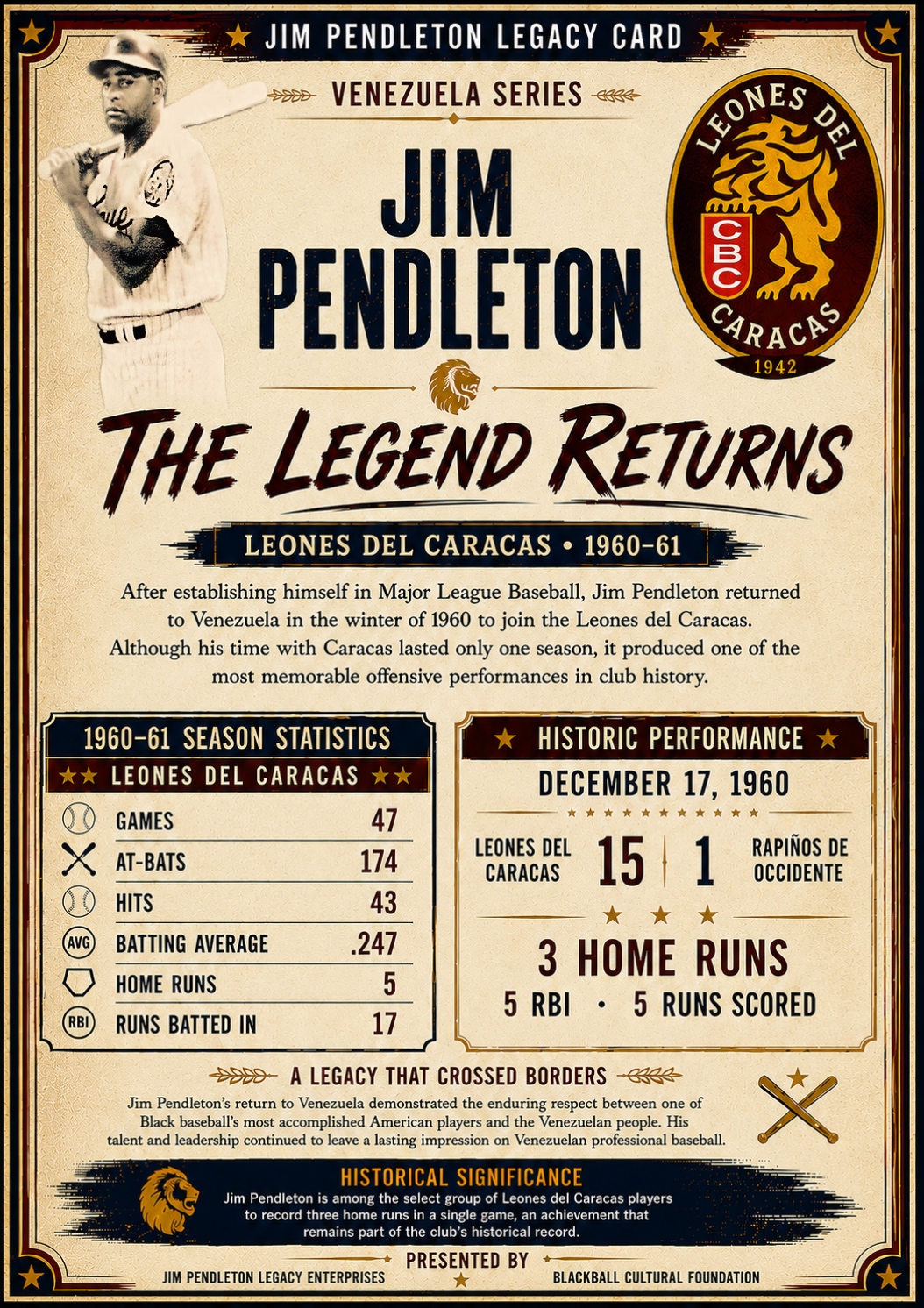
Jim Pendleton Legacy Card Featuring His Historic Venezuela Winter League Season
1960
Major League Baseball
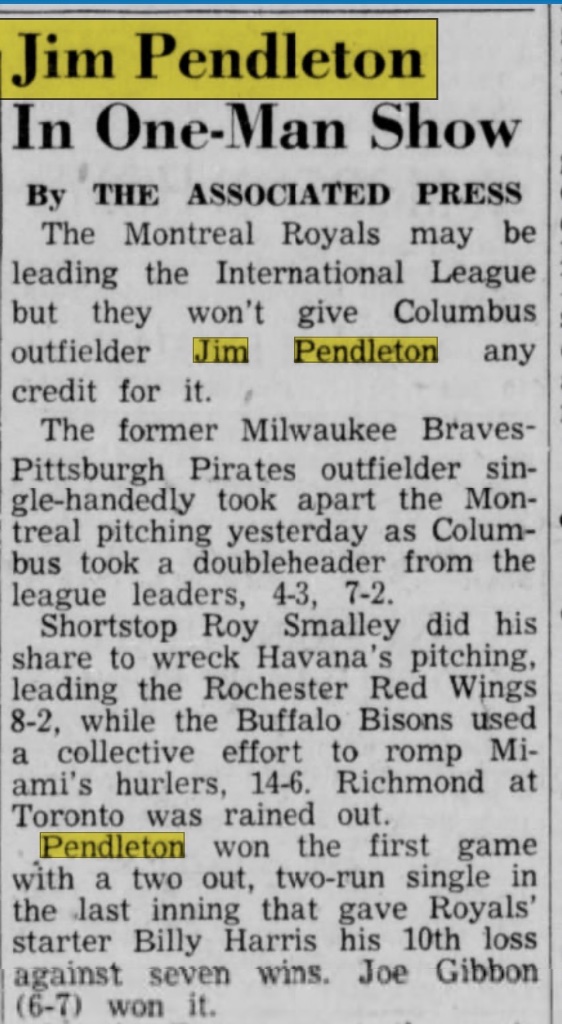
Jim Pendleton In One-Man Show
1957
Post Career
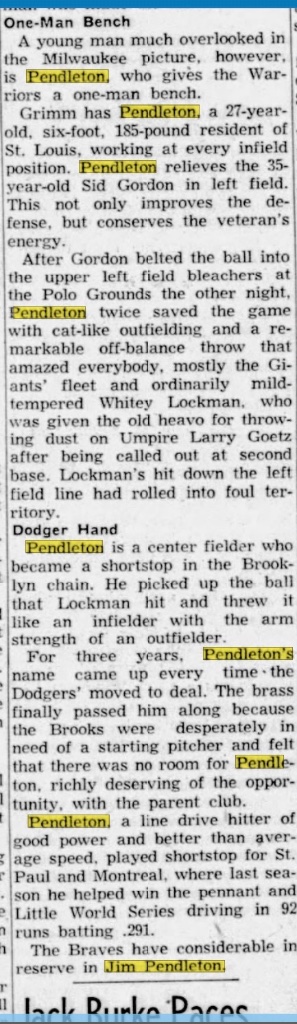
Pendleton: The One-Man Bench
1954
Major League Baseball
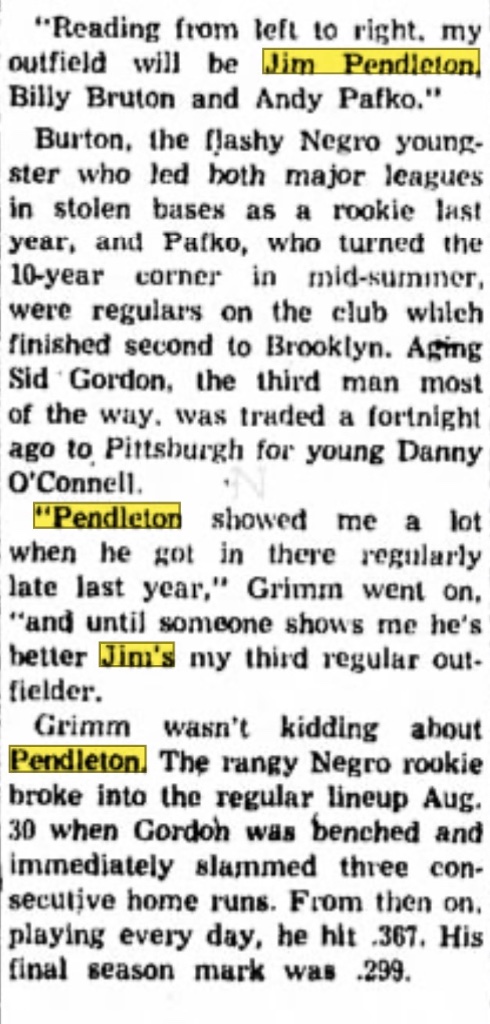
Grimm Tabs Pendleton as Third Regular Outfielder
1953
Major League Baseball
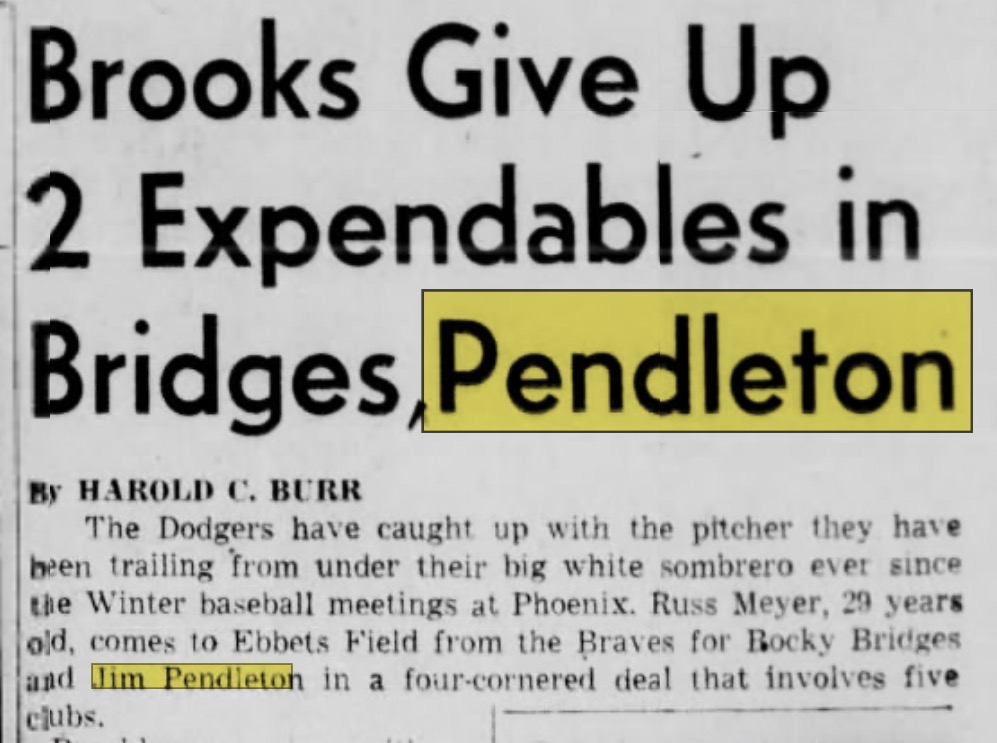
Brooks Give Up 2 Expendables in Bridges, Pendleton
1954
Major League Baseball
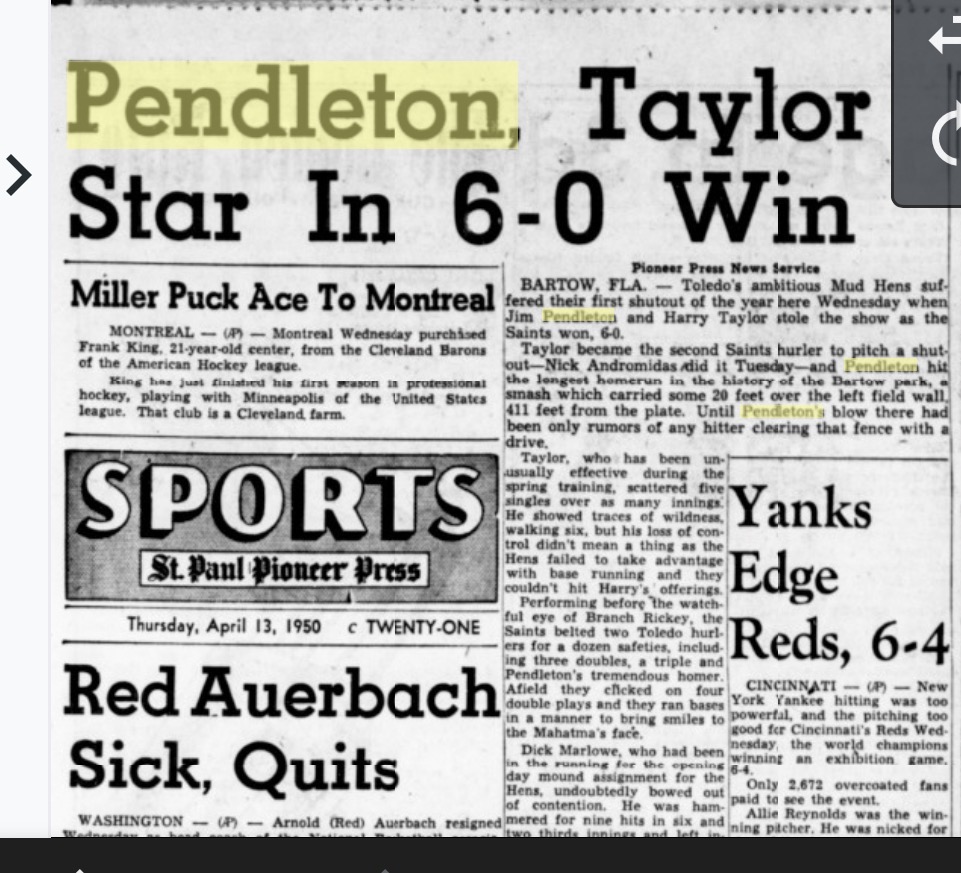
Pendleton, Taylor Star In 6-0 Win — St. Paul Pioneer Press, April 13, 1950
1950
Major League Baseball
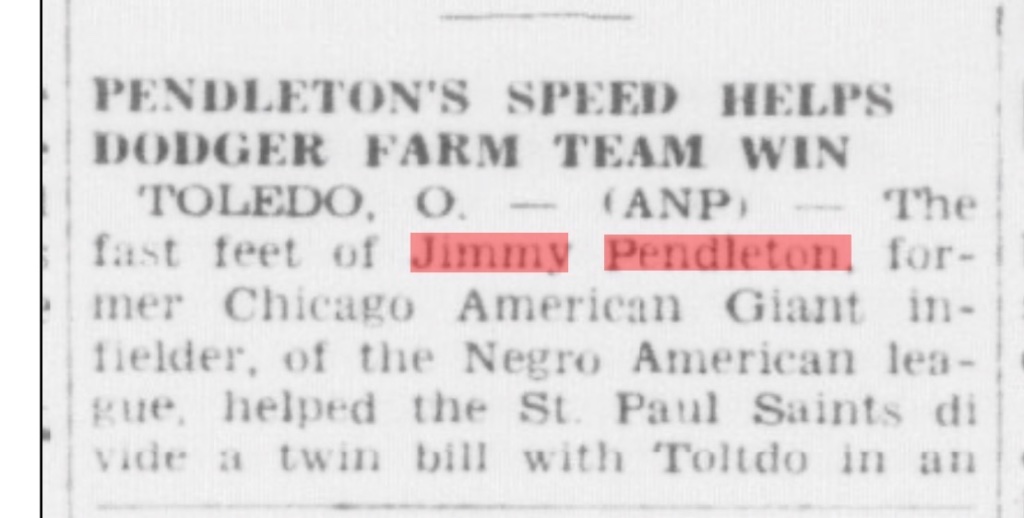
Pendleton's Speed Helps Dodger Farm Team Win — Associated Negro Press
1950
Major League Baseball
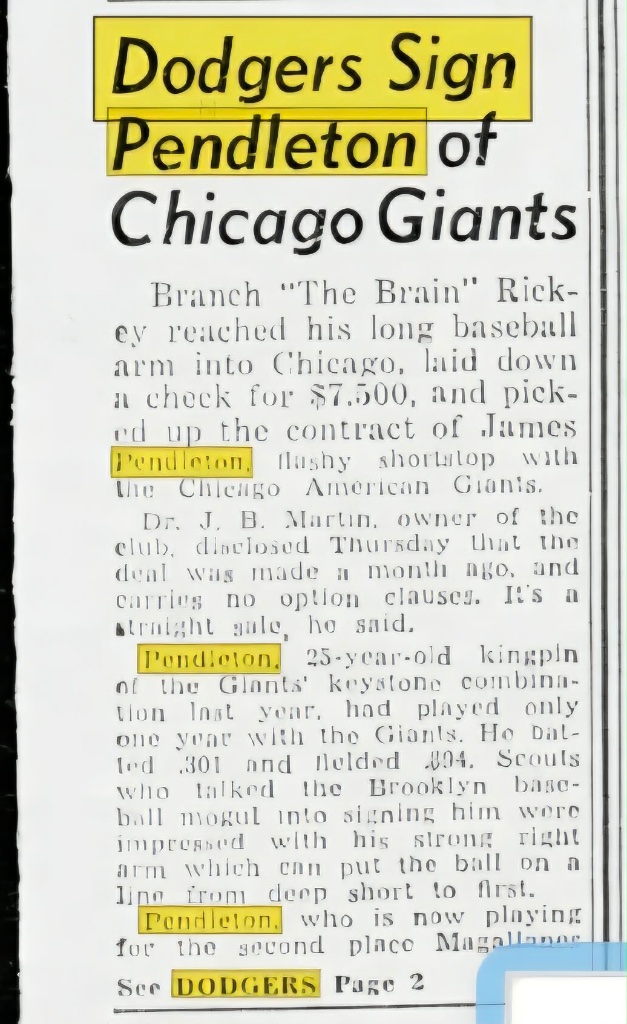
Dodgers Sign Pendleton of Chicago Giants
1949
Major League Baseball
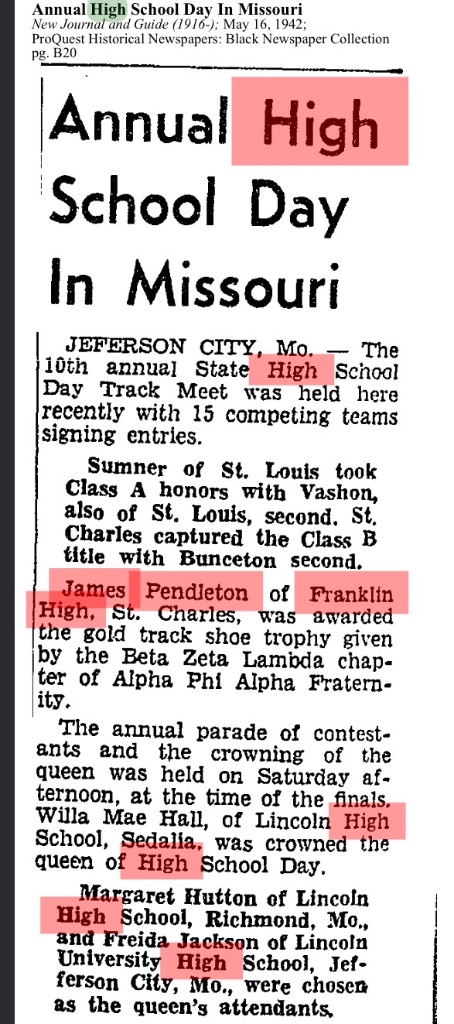
Annual High School Day In Missouri — New Journal and Guide, May 16, 1942
1942
Negro Leagues
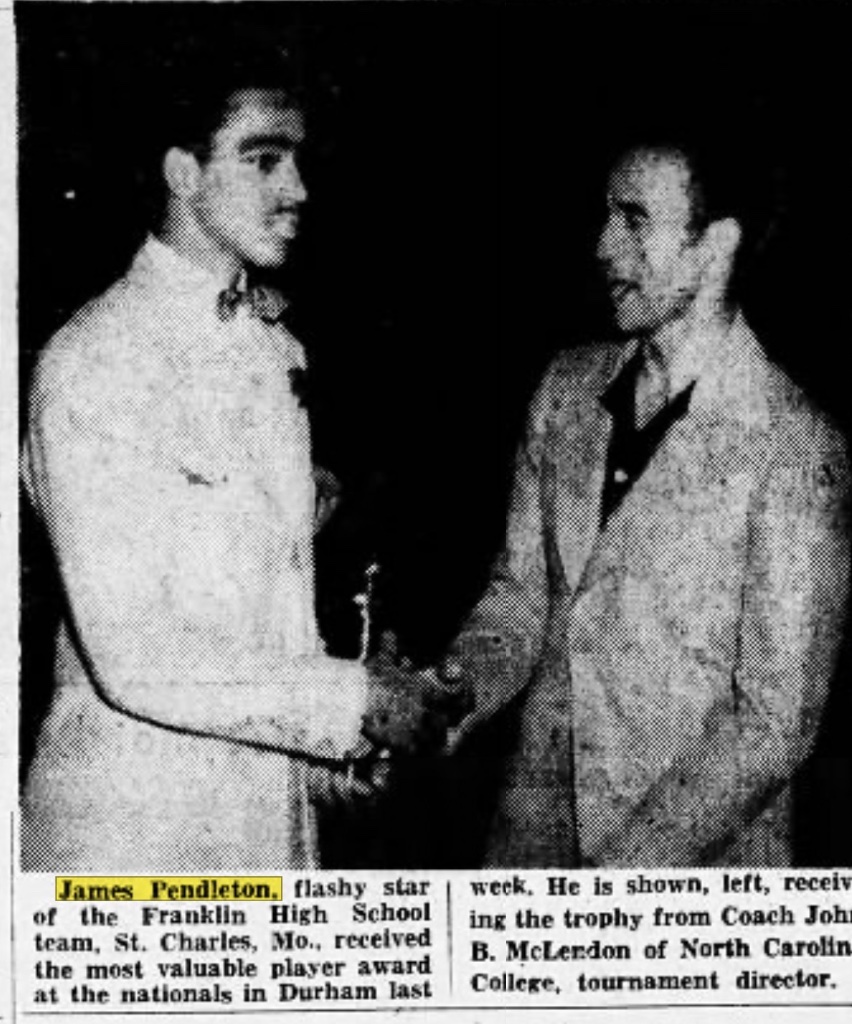
James Pendleton Receives MVP Trophy from Coach John B. McLendon — New Journal and Guide, March 28, 1942
1942
Negro Leagues
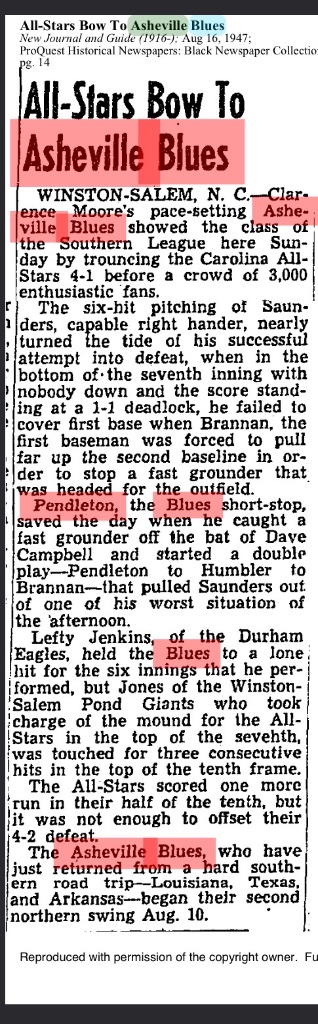
All-Stars Bow To Asheville Blues — New Journal and Guide, August 16, 1947
1947
Negro Leagues
Featured Exhibit
Photographs
A curated selection of photographs documenting Jim Pendleton's life and career — from his early years as a multi-sport athlete through his professional career and beyond.
photographs · 1953
Jim Pendleton — Milwaukee Braves Portrait, "If I Have to Settle for Less" Campaign
photographs · 1954
Jim Pendleton and Lew Burdette, Milwaukee Braves Locker Room, circa 1953–1957
photographs · 1955
Jim Pendleton and Veryl Switzer: Major League Malteds
photographs · 1942
James Pendleton Receives MVP Trophy from Coach John B. McLendon — New Journal and Guide, March 28, 1942
Curator's Corner
Historical Insights
Brief notes on the historical significance behind the artifacts in Jim Pendleton's archive.
Leland Giants — Black Baseball as Economic Platform (1906–1910)
THE LELAND GIANTS AS ECONOMIC PLATFORM (1906–1910) Central thesis: Pre-1920 Black baseball was not a primitive prehistory waiting for league organization. It was a functioning economic system. Baseball gathered consumers, generated gates, supported enterprises, required labor, demanded transportation, financed hotels, funded newspapers, and created the conditions for community capitalization. The league sat on top of the market. The market did not sit on top of the league. KEY FACTS — LELAND GIANTS CASE STUDY: - Winter 1906: Leland Giants Base Ball and Amusement Association acquired Frank C. Leland's baseball enterprise for what the Indianapolis Freeman described as "its name, good will and a few last year's bats." Initial capital stock: $2,500. - 1907: Club played 112 games. Freeman characterized the season as "a prosperous one." The acquire-validate-recapitalize sequence followed. - 1908: Authorized capital stock increased from $2,500 to $100,000 (fortyfold). Shares priced at $10 each — deliberately accessible. Stock solicitation contemplated installment payments. - The advertisement asked whether investors favored "The Race Owning and Operating" the enterprise. This was not projection — they stated Black ownership as part of the proposition. - Proposed enterprise included: theater, light opera, roller skating, dance pavilion, amusement rides, miniature railway, boating, automobile attractions, concessions, summer hotel (~1,000 guests). Projected employment: 1,000+ people, May–October. NOTE: these figures are stock solicitation projections, not verified outcomes. - Stockholders were to receive preference as employees — connecting investment, ownership, labor, and consumption in one person. THE ECONOMIC LOOP: Capital builds the asset → asset creates employment → employment creates income → income creates purchasing power → purchasing power creates consumer demand → demand produces revenue → revenue sustains the asset → investors hold ownership interest. This is the Leland model. KEY FIGURES IN THE LELAND ECOSYSTEM: - Frank C. Leland: entrepreneur, original brand builder - Beauregard F. Moseley: lawyer and businessman, provided legal/corporate architecture - Robert R. Jackson: publisher and civic leader, information network - Rube Foster: baseball knowledge, player management, competitive production. NOTE: Foster entered and developed inside this pre-existing ecosystem. Black baseball did not come from Foster — Foster came from Black baseball. THE TRADITION THAT FOLLOWED: 1. Hilldale (Darby, PA): neighborhood club → for-profit cooperative (1914) → incorporated Hilldale Baseball and Exhibition Company (1917, $10,000 capital). Controlled grounds, sold advertising, rented facility, partnered with streetcar company for transportation. 2. Nashville Negro Baseball Association and Amusement Company: chartered March 26, 1920 by Tom Wilson and 7 investors. Tennessee charter: $5,000 capital. Purpose extended beyond one team to organizing league clubs across Tennessee. Tom Wilson Park opened 1929, Trimble Bottom neighborhood. 3. Pittsburgh Crawfords / Gus Greenlee: Greenlee Field opened 1932, Hill District. ~7,500 seats. ~$100,000 reported cost. Multi-use: football, soccer, boxing. Crawford Grill + boxing promotion + Crawfords + stadium + league organization = complete Black entertainment/sports ecosystem. INTEGRATION QUESTION: When independent Black baseball clubs disappeared, what disappeared with them? Not merely uniforms — but the economic relationships among owners, players, managers, promoters, booking agents, sportswriters, printers, advertisers, hoteliers, restaurant owners, vendors, groundskeepers, ticket sellers, concession workers, lawyers, accountants, transportation providers, and Black consumers. Access and ownership are not interchangeable. A community can become integrated into someone else's economy while losing portions of its own. RECONSTRUCTION 2.0 BLUEPRINT: Find demand. Build or acquire the anchor enterprise. Prove the market. Aggregate capital. Make ownership accessible. Bring the consumer into the ownership structure. Convert capital into productive assets. Build complementary enterprises around those assets. Create employment. Increase circulation of community income through community-owned productive relationships. Reinvest. Build again.
Rube Foster — The Player's Case (Independent of 1920)
Rube Foster's claim to historical greatness does not rest solely on organizing the Negro National League in 1920. As a pitcher, Foster was one of the most formidable of his era. In 1903, he threw four complete games in the Cuban X-Giants championship series against the Philadelphia Giants. In 1904, pitching for Philadelphia in their championship series, he struck out 18 batters in one game and won the deciding game allowing only two runs. Honus Wagner described Foster as one of baseball's greatest pitchers and the smartest pitcher he had ever encountered. Frank Chance described him as the most polished pitcher he had seen. White sportswriters compared Foster to Addie Joss, Amos Rusie, Old Hoss Radbourn and Cy Young. Satchel Paige — born in 1906 — belongs to a later generation. By the time Paige was born, Foster had already established himself as an elite professional pitcher. The absence of a conventional major-league statistical record for Foster reflects the color line that excluded him — not an absence of major-league-caliber ability. The archive itself reflects the structure that excluded him. Foster belongs in the historical conversation about the greatest Black pitchers ever produced by American baseball, independent of his executive career.
Key Characters — Black Baseball Origin Narrative (1865–1920)
CHARACTER PROFILES for the origin narrative of Black professional baseball, per Karl Pendleton II's authoritative account: BUD FOWLER: First victim of white baseball's color ban (1887 Gentlemen's Agreement). Carrier of organized baseball's operational knowledge into Black league formation. Founded Page Fence Giants 1895 with Grant "Home Run" Johnson and commercial backing from J. Wallace Page — complete with branded uniforms, custom railroad sleeping car, advance promotion. Functioned as a franchise expansion manager, traveling town to town establishing new clubs. 1904 public newspaper plea for a Black league. The Rosetta Stone of reconstruction. SOL WHITE: Present at the founding at age 19. Player, manager, co-owner of Philadelphia Giants by 1902. Published definitive history of organized Black baseball in 1907. Joined Brooklyn Royal Giants 1909. Manager of Lincoln Giants 1911. The institutional memory of the movement in print. RUTHERFORD HAYES JONES: Washingtonian businessman and market maker. May 1906, promoting Black baseball in Washington. Co-founded Washington Giants 1909 with Edelin and Gaskins. Specialized in baseball operations knowledge. His relationship with Nate Strong was highly influential in creating permanent market demand. WILLIAM J. EDELIN & AARON GASKINS: Co-founders of Washington Giants 1909. Edelin from hospitality industry; Gaskins from transportation industry. Each brought investment capital and operational knowledge. TOM "SMILING TOM" WILSON: Born to two doctors. 24 years old in 1913, watching Rube Foster's Giants in Nashville — focused not on the game but on the crowd, the money, the product. 1914: booking and promoting games on front-money/gate model. 1918: purchases the Standard Giants. His education gave him the language of enterprise. Would become central to the 1920 consolidation with Foster. RUBE FOSTER: Greatest player in Black baseball by 1904, but nowhere near management. Joins Leland Giants 1907, begins learning management as player/manager. Builds Chicago American Giants by 1911 as a coast-to-coast force. 1913 collision with Lincoln Giants opens his eyes to institutional ambitions. 1915 participates in National Association of Colored Baseball Clubs. The consolidating genius of 1920. GRANT "HOME RUN" JOHNSON: Co-founder of Page Fence Giants 1895 with Bud Fowler. NATE STRONG & WALTER SCHLICHTER: Organized the National Association of Colored Base Ball Clubs of the United States and Cuba, October 29, 1906. C.I. TAYLOR: Birmingham Giants established 1907. Southern anchor of the expanding Black baseball economy. Becomes a force in the 1915 formation of the western/national association. GRANT "HOME RUN" JOHNSON: Power-hitting pioneer, Page Fence Giants co-founder. THE McMahon BROTHERS (Jess and Rod): Founded Lincoln Giants 1911. WWE family lineage. Immediately assembled a headline roster with Sol White as manager.
A Life in Baseball
Career Timeline
Key milestones from Jim Pendleton's journey — drawn directly from the Legacy Journal archive. Click any event to read the source story.
8 milestones · Curated from 21 archive articles
Baseball Collection
Jim Pendleton — On the Diamond
From the Negro Leagues to the Major Leagues, Jim Pendleton's baseball career spanned decades and leagues. This collection gathers photographs, documents, memorabilia, and press clippings from every chapter of his life on the diamond — a record of one of the most versatile players of his era.
37
Items
37 items found
Jim Pendleton — Milwaukee Braves Portrait, "If I Have to Settle for Less" Campaign
Come and Build Your Own — Leland Giants Blackball Journal Feature, 2026
Jim Pendleton — A Legend Across Leagues, A Pioneer Across Borders (Career Tribute Infographic)
Conklin Bray Column — Pendleton's Disputed Catch at Lexington Park, American Association 1949
Joe Hennessy Game Report — Pendleton Beaned at Lexington Park, St. Paul Saints vs. Kansas City 1949
1949 American Association Season-End Statistics — Jim Pendleton Hits .274, St. Paul Saints
"Pendleton Gaining Confidence at St. Paul" — Pittsburgh Courier, 1949
"Jim Pendleton Taking It Easy" — Pittsburgh Courier, St. Paul Saints 1949
Jim Pendleton Beaned by Lew Burdette — ANP Wire Report, St. Paul Saints 1949
Jim Pendleton and Lew Burdette, Milwaukee Braves Locker Room, circa 1953–1957
Jim Pendleton and Veryl Switzer: Major League Malteds
Newspaper clipping featuring Jim Pendleton's stellar performance for Milwaukee Braves
Newspaper Clipping Featuring Jim Pendleton with the Chicago American Giants
Newspaper clipping highlighting Jim Pendleton's strong batting performance for Milwaukee
Negro Players Setting Terrific Pace in Minor Leagues Newspaper Article
Newspaper clipping highlighting Jim Pendleton's early professional baseball career trajectory
Newspaper clipping reporting the Asheville Blues' four-game sweep of Creoles
Newspaper Clipping Highlighting Jim Pendleton's Defensive Brilliance with Asheville Blues
Jim Pendleton Bridging Cultures with the Leones del Caracas
Jim Pendleton Legacy Card Featuring His Historic Venezuela Winter League Season
Jim Pendleton In One-Man Show
Pendleton: The One-Man Bench
Grimm Tabs Pendleton as Third Regular Outfielder
Brooks Give Up 2 Expendables in Bridges, Pendleton
Pendleton, Taylor Star In 6-0 Win — St. Paul Pioneer Press, April 13, 1950
Pendleton's Speed Helps Dodger Farm Team Win — Associated Negro Press
Dodgers Sign Pendleton of Chicago Giants
All-Stars Bow To Asheville Blues — New Journal and Guide, August 16, 1947
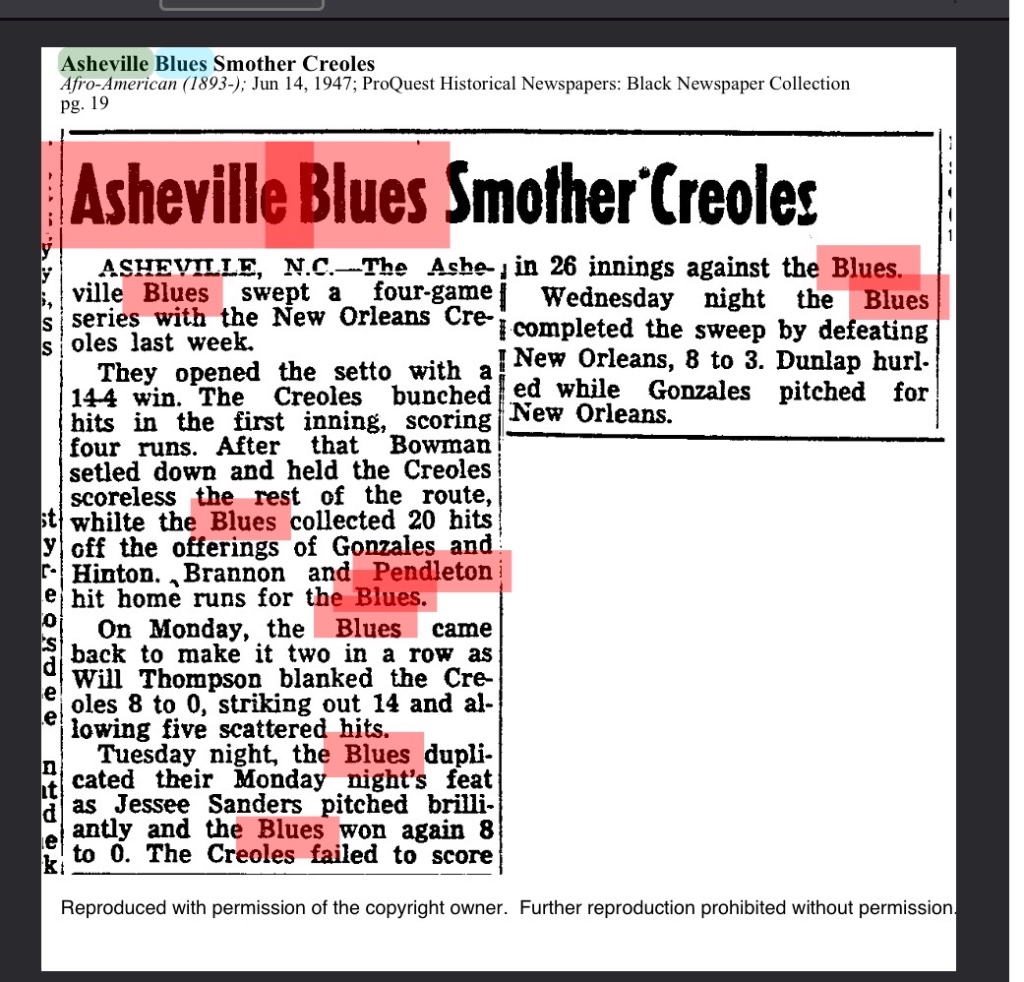
Asheville Blues Smother Creoles — Afro-American, June 14, 1947
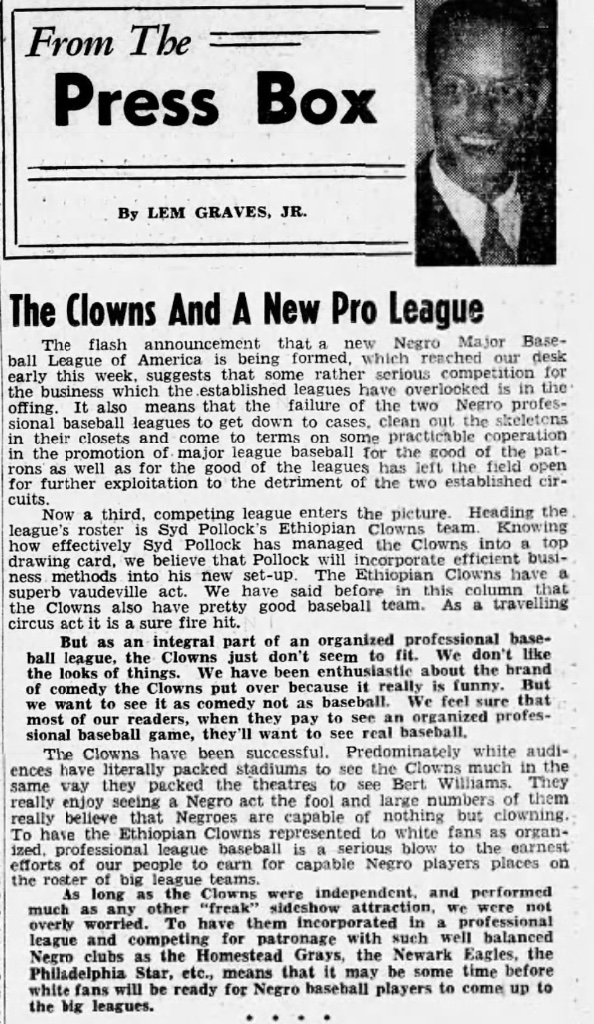
From The Press Box: The Clowns And A New Pro League
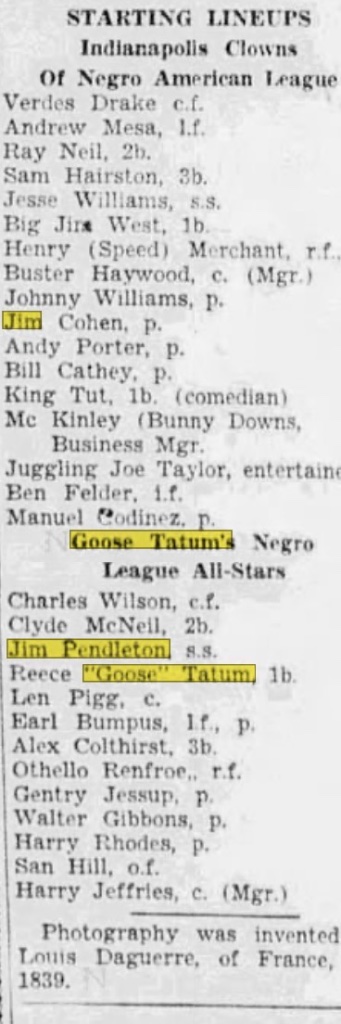
Goose Tatum's Negro League All-Stars vs Indianapolis Clowns — Starting Lineups
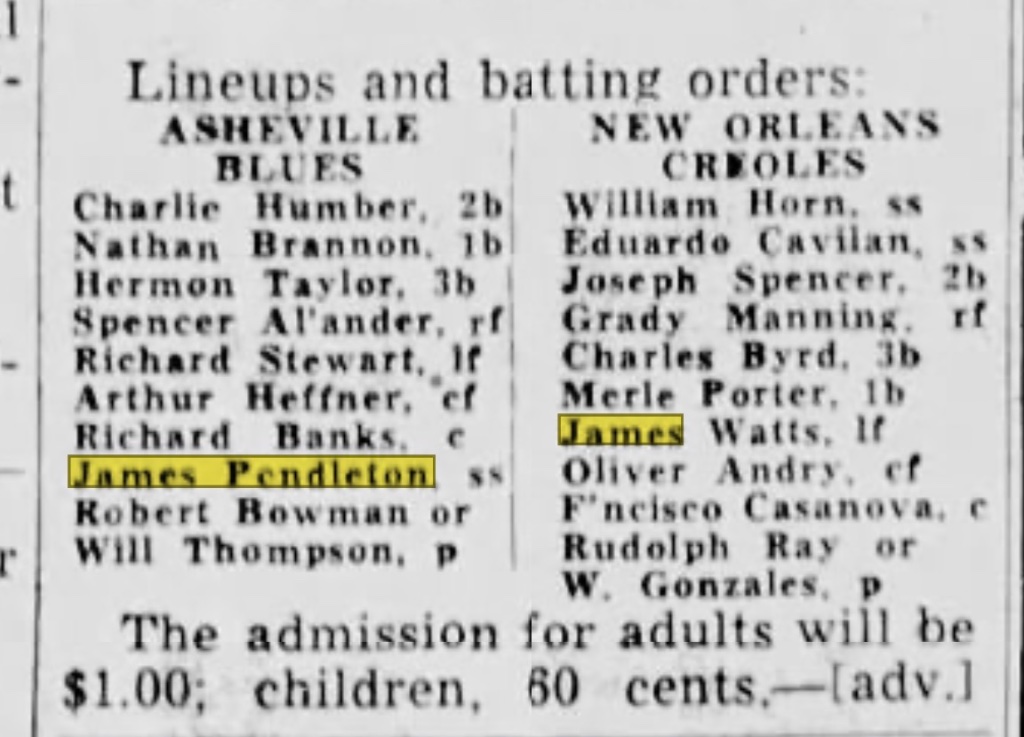
Asheville Blues vs New Orleans Creoles — Lineups and Batting Orders
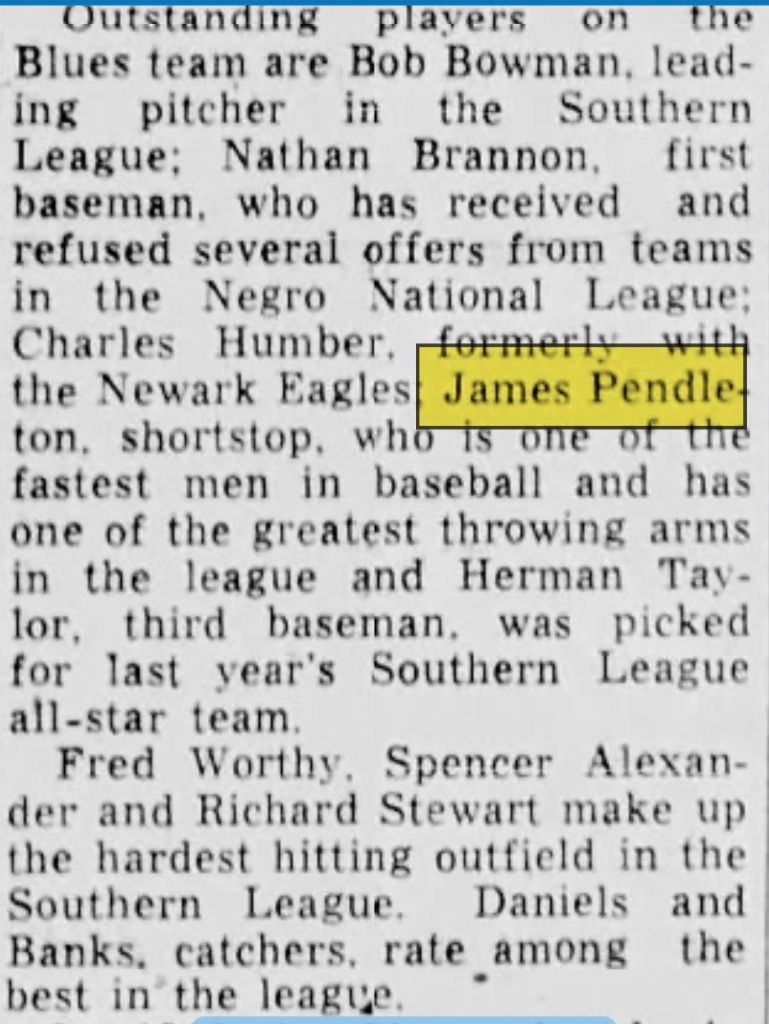
Outstanding Players on the Blues — Newspaper Excerpt
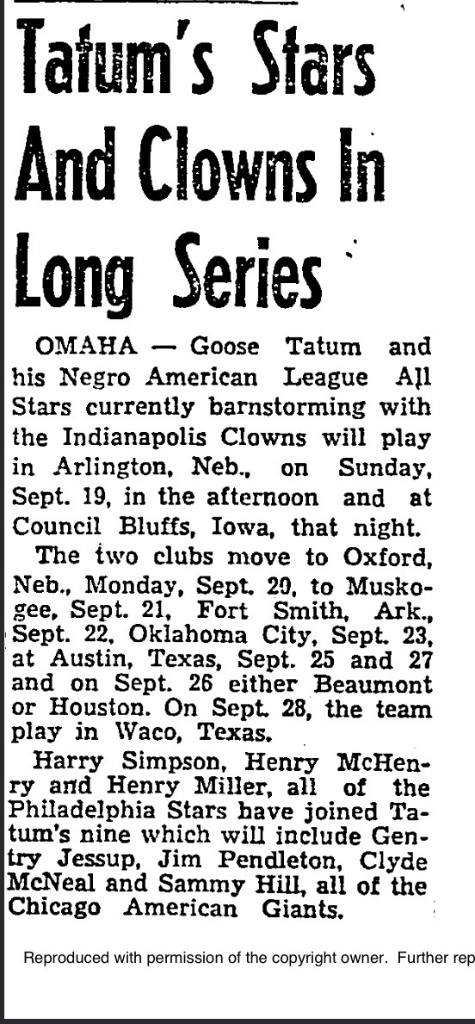
Tatum's Stars & Clowns Barnstorming Tour — Pendleton on All-Stars Roster
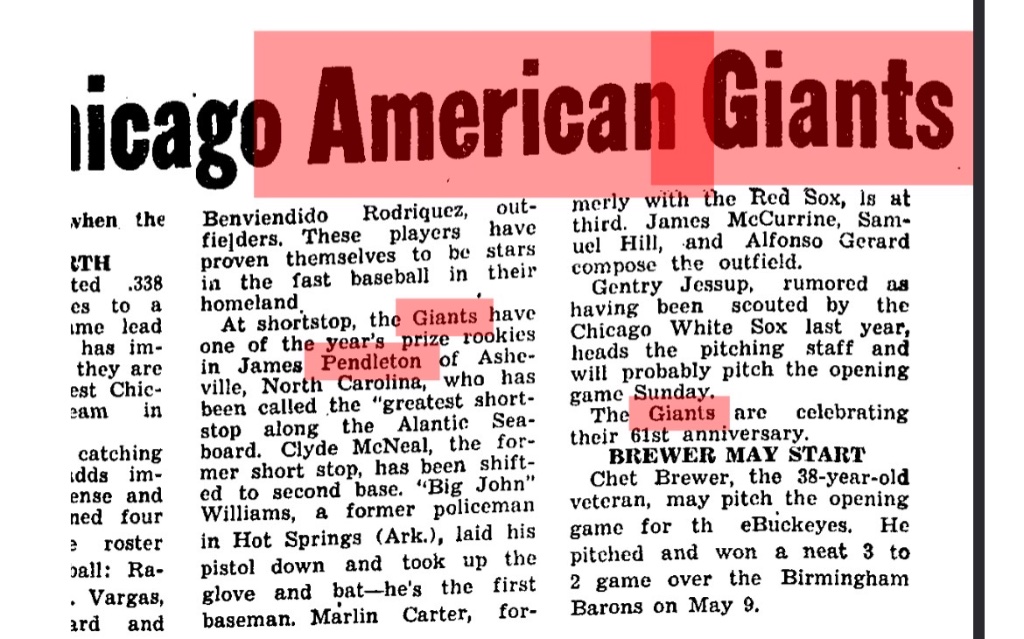
Chicago American Giants — Pendleton Named 'Prize Rookie' at Shortstop
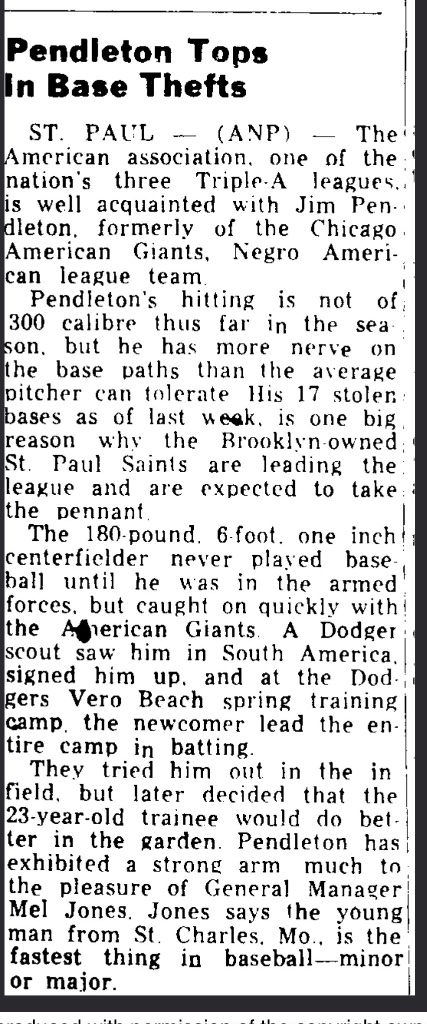
Pendleton Tops In Base Thefts — St. Paul Saints, Triple-A (ANP Wire)
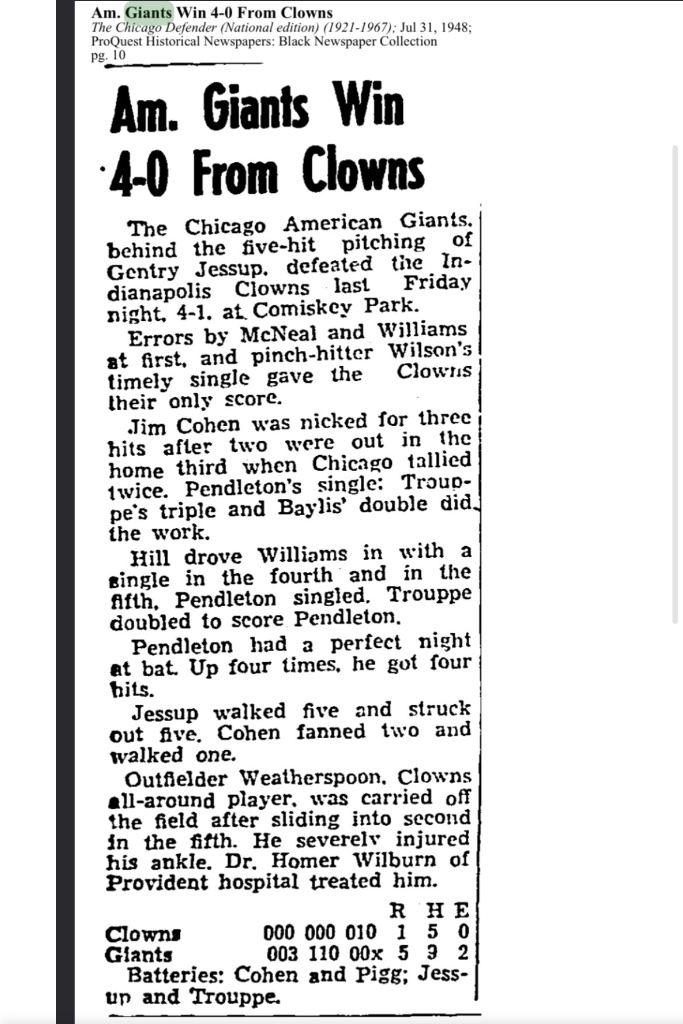
Am. Giants Win 4-0 From Clowns — Pendleton Goes 4-for-4 (Chicago Defender, July 31, 1948)
Educational Resources
Black Baseball History
Understanding the world Jim Pendleton played in — the segregation, the brilliance, and the legacy of the Negro Leagues that shaped American baseball forever.
~2,300
Negro Leagues Players Documented
1920
Year First Negro National League Founded
6
Major Negro Leagues Circuits
1948–1962
Jim Pendleton's Pro Career Span
History Through the Decades
External Resources & Further Reading
Negro Leagues Baseball Museum
The definitive institution preserving the history of Black professional baseball in Kansas City, Missouri.
MLB's Negro Leagues History
Major League Baseball's official archive recognizing Negro Leagues players and statistics.
Society for American Baseball Research
SABR's comprehensive biographical and statistical research on Negro Leagues players.
Baseball Reference – Negro Leagues
Play-by-play records, career statistics, and biographical profiles of Negro Leagues players.
Interactive Challenge
Test Your Knowledge
How well do you know the life of Jim Pendleton and the history of the Negro Leagues? Take the quiz and find out.
10 questions covering Jim Pendleton's career, Negro Leagues history, and baseball lore. Each correct answer reveals a historical fact.